
Last updated October 17, 2026
 Metal roofing
 Architectural shingles
 Tile roofing
 GAF
GAF Owens Corning
 Flat & low-slope
Free roof inspection with deck photos before we talk money - GAF and Owens Corning certified installation
Roofing Warning Signs: A Ventura Homeowner’s Reference Guide
The call we get most often at Crestview starts with the same sentence: “I noticed a stain on my ceiling after the last rain.” By the time that stain shows up, water has usually been moving through the roof system for months. It traveled past the shingles, soaked into the underlayment, worked its way around a nail or seam, and only then found drywall. The repair bill at that point is typically three to five times what it would have been if an earlier signal had been caught. Most roofing guides in Ventura show you dramatic photos: curled shingles, missing tiles, a branch through the decking. For a deeper look at local conditions, see our Complete Guide to Roofing in Ventura. Those are real problems. But the warning signs that cost homeowners the most money are the quiet ones inside the house. This guide covers both, with a focus on what Ventura’s coastal climate does to roofs that inland guides miss.
Quick Answer
The clearest roof warning signs in Ventura are stains on ceilings or walls, light visible through attic penetrations, granule accumulation in gutters or at valley seams, cracked or lifted flashing around chimneys and vents, and shingle edges that cup or curl. Interior signs usually appear months after water entry begins, so an attic inspection after any visible ceiling change is the single most valuable check you can make. If you catch these early, most repairs cost a few hundred dollars. If you wait, the same issue becomes a roof replacement.
Styles & brands we work with
Table of Contents
- Interior Warning Signs That Appear Before Roof Damage Is Visible
- Attic Humidity and Light Gaps: The Two Checks Most Homeowners Skip
- Reading Drywall Stain Patterns: Active Leaks vs. Old Damage
- Exterior Warning Signs Specific to Ventura’s Coastal Climate
- Granule Loss at Valley Seams: The Structural Warning Most Guides Miss
- Cracked Tile: Cosmetic Issue or Water Entry Point?
- Flashing Warning Signs: The Three Failure Points on Ventura Homes
- How to Document Roof Damage for a Precise Written Estimate
Interior Warning Signs That Appear Before Roof Damage Is Visible
Roof leaks do not start at the ceiling. They start at the roof surface and travel downward through the path of least resistance. That path can be a rafter, a wiring chase, or the edge of a truss. It can run horizontally for several feet before dripping onto insulation or drywall. This is why the interior signs are so important: by the time you see water inside the living space, the leak has been active long enough to saturate multiple layers of material.
In Ventura, the most common interior warning signs we see include:
- Ceiling stains with a brown or copper tint. Water that passes through wood framing picks up tannins, which is why roof leak stains look different from plumbing leak stains. A roof leak stain usually has a darker ring around the edge and a lighter center.
- Paint bubbling or peeling on ceilings or upper walls. Water trapped between paint and drywall causes the paint to lose adhesion. In Ventura’s damp winter months, this bubbling can appear within a week of a roof breach.
- Musty odor in a single room or hallway. Trapped moisture in insulation or drywall creates a smell that gets stronger after rain or on humid days. If the smell is stronger on one end of the house than the other, follow it toward the roofline.
- Doors or windows that start sticking. Moisture swells framing lumber. If an interior door that used to close smoothly now catches, and the problem is on the upper floor, or near a wall that rises to the roofline, check for a roof leak before calling a carpenter.
- Sagging drywall near the ceiling edge. Repeated leaks saturate drywall until it loses structural integrity. A subtle dip or shadow line along a ceiling corner is often the first visible sign.
None of these signs tell you exactly where the roof breach is. Water travels. But they do tell you that a breach exists, and that is the point of this guide. If you are seeing any of these, the next step is an attic inspection, not a patch on the ceiling. For a full breakdown of what a repair involves, see our page on Roof Repair in Ventura.
Attic Humidity and Light Gaps: The Two Checks Most Homeowners Skip
Most Ventura homeowners never go into their attic. That is understandable, given the average attic in this city is cramped, hot, and full of insulation dust. But the attic is the only place where you can see the underside of the roof deck, and it reveals more about roof health than anything visible from the curb.
Check 1: Light Gaps Around Penetrations
Every roof has penetrations: plumbing vents, electrical masts, furnace flues, skylights, and attic vents. Each of those penetrations requires a seal at the roof surface, and each seal eventually fails. The fastest way to find failed seals is to go into the attic on a sunny day, turn off any attic light, and let your eyes adjust for 60 seconds. Then look at each penetration point. If you can see daylight around any pipe, conduit, or vent, water can enter at that same spot.
This is not a hypothetical. In Ventura’s older neighborhoods, particularly the Midtown and College area homes built between 1940 and 1970, original flashing around plumbing stacks was often made from galvanized steel. After 50-plus years of salt air exposure, that steel corrodes and separates from the pipe. The gap might only be an eighth of an inch, but in a heavy February storm, that gap channels a remarkable amount of water.
Check 2: Attic Humidity After Rain
Attic humidity is the quiet warning sign that costs homeowners the most. Here is the sequence: a small roof breach admits water during a rain event. The water soaks into insulation or the underside of the roof deck. The next sunny day, that trapped moisture evaporates into the enclosed attic space. Humidity spikes. If you are not in the attic to feel it, you miss it. The water dries, the stain fades, and you think everything is fine. But each cycle of wetting and drying degrades the roof decking a little more.
A hygrometer costs about $15 at any hardware store. Place one in the attic and check it 24 hours after the next significant rain. Ambient Ventura attic humidity normally runs between 40 and 60 percent, depending on the season. A reading above 70 percent within a day of rain is a warning sign that water entered the attic, even if no stain is visible anywhere. If you catch it at this stage, the fix is usually a targeted repair. If you wait until the drywall stain appears, the repair often includes drywall work, insulation replacement, and potentially decking repair.
Reading Drywall Stain Patterns: Active Leaks vs. Old Damage
Not every ceiling stain is an active problem. Homes in Ventura with 20 or 30 years of history often carry old stains from leaks that were repaired. Knowing the difference saves you from paying for a roofer to investigate a leak that is no longer there, and it also saves you from ignoring a stain because you assume it is old.
Here is how to read stains on drywall like an inspector:
- Color. An active leak produces a stain that is darker at the edges and lighter in the center. It may feel damp or cool to the touch. An old, inactive stain is uniform in color, usually a light tan or yellowish brown. It will feel dry and may have a chalky texture.
- Shape. Active leaks create irregular, spreading shapes, often with a scalloped or feathered edge where water is wicking outward. Old stains have crisp, stable boundaries. If you photograph the stain today and again in a month and the boundary has not moved, it is likely inactive.
- Response to rain. This is the most reliable test. Is the stain larger or darker after the last rain event? Ventura’s rain comes in defined winter pulses, which makes this easy to track. Mark the outline of the stain with a pencil and photograph it with a timestamp. Check again after the next storm.
- Texture changes. Active leaks cause bubbling, peeling, or a slightly raised surface as paint layers separate. Old damage stays flat. If you see a stain with a raised, cracked paint film at the center, water is still moving through the drywall.
One Ventura-specific note: because this city sits directly on the coast, airborne salt and moisture interact with drywall stains differently than inland homes. Stains near the coast may develop a visible salt residue at the edge over time, which looks like a faint white ring. That is a sign the leak was active for a while before drying. It does not mean the problem is active now, but it does tell you the roof has a history.
Exterior Warning Signs Specific to Ventura’s Coastal Climate
Ventura does not get snow or ice, which means homeowners here do not deal with ice dams or freeze-thaw cycling. But the coastal climate creates its own set of roof problems, and a guide written for, say, Minnesota, will not tell you about them. Our Seasonal Roofing Care for Ventura: Year-Round Homeowner’s Guide breaks down what to watch for each season.
The coastal factors that matter most:
- Salt air corrosion. Marine air carries salt particles that settle on metal surfaces and accelerate corrosion. This affects flashing, fasteners, and metal valley liners. A galvanized flashing detail that would last 40 years in Simi Valley might fail in 20 years in the Pierpont or Midtown areas closer to the ocean.
- Persistent morning fog. Ventura’s marine layer means roofs stay damp for hours after sunrise, even in summer. Any crack, gap, or failed seal has more opportunities to admit moisture, because moisture is present more of the time. A small crack that sits dry in an inland climate sits wet here.
- UV exposure on south-facing slopes. The sun here is intense from March through October. South and west-facing roof slopes take the worst of it. Asphalt shingles on those slopes lose granules faster, and tile underlayment cracks sooner. If your roof is unshaded on the south side, expect that side to show wear years before the shaded north side.
- Santa Ana wind events. The fall winds gusting from the northeast can shift tiles, lift shingle edges, and peel back flashing that was already marginal. After each significant Santa Ana event, walk the property and look for tiles or shingles on the ground or out of alignment.
These factors do not produce the same warning signs you see in generic guides. For example, cupping or curling shingles are usually a heat and UV problem. In Ventura, they are significantly worse on south-facing slopes. If you see curling shingles only on the sunny side of your roof, the decking and underlayment on that side may also be compromised.
Granule Loss at Valley Seams: The Structural Warning Most Guides Miss
Roof valleys are the V-shaped channels where two roof planes meet. They carry more water than any other part of the roof during rain, because water from both slopes concentrates into that single line of flow. On asphalt shingle roofs in Ventura, the valley is where granule loss matters most, and it is the warning sign most guides gloss over.
First, understand what is cosmetic and what is not. If you see dark streaks or greenish patches running down your shingles, that is usually algae. Ventura’s foggy mornings and mild temperatures create ideal algae conditions. Algae is ugly, but it does not damage the roof structure. You can clean it, or you can leave it. It is not a leak risk.
Granule loss is different. Shingle granules are the crushed stone embedded in the asphalt. They protect the asphalt from UV degradation. When granules wear off, the asphalt beneath becomes brittle and cracks. On the broad face of the roof, granule loss happens gradually and evenly. At the valley seam, it happens faster because water volume is highest there.
Here is how to check a valley seam for structural granule loss:
- Look at the valley from a ladder or from a second-story window. Focus on the shingles directly adjacent to the valley metal.
- Compare the color of those shingles to shingles on the main field of the roof. Valley shingles that look significantly lighter, more gray, or more shiny than the field shingles have lost granules.
- Check the gutter at the base of the valley after a rain. If you find a buildup of granular material that looks like coarse sand, that sand came from the shingles above. A little is normal on any roof. A consistent, heavy deposit indicates accelerated granule loss.
- Look for bald spots or cracking on valley shingles. Once the asphalt is exposed and cracked, water gets under the shingle at the exact point where water volume is highest.
We see this pattern most often on Ventura roofs with original 20-year-old or older composition shingles. Valley seams are not the place to defer maintenance, because if water gets under the valley shingles, it goes straight to the decking. For a deeper look at replacement options, our Roof Replacement in Ventura page covers material choices and what a full replacement involves.
Cracked Tile: Cosmetic Issue or Water Entry Point?
Tile roofs are common throughout Ventura, and cracked tile is the single most frequent thing homeowners ask us about. Most of the time, the crack is cosmetic. But sometimes it is not, and knowing the difference can save you from either an unnecessary repair bill or a slow leak that rots the roof deck over several winters.
The key fact about tile roofs is that the tile itself is not the waterproofing layer. Water that gets under the tile is directed to the eaves by the underlayment, which is the real waterproof barrier. So a cracked tile over intact underlayment is not, by itself, a leak. The problem comes when the underlayment has aged out, or when the crack location concentrates water flow.
The finger-press test: put light but steady pressure on the cracked tile with your fingers, pushing down. If the tile piece moves or flexes, the clamp or fastening has likely failed, and the broken piece may slide out of position in the next Santa Ana wind. That turns a cosmetic crack into an exposed underlayment gap, which is a genuine water entry risk. If the tile is already broken into pieces that shift relative to each other, treat it as a repair item.
Where the crack sits matters more than the crack itself. A hairline crack near the middle of a flat tile, over a field of intact underlayment and away from any water concentration, is usually cosmetic. A crack near the edge of a tile that overhangs a sidewall or headwall flashing is a different story, because that is where water volume gathers and where underlayment transitions create vulnerable seams. Cracks at valley intersections also matter more, for the same reason valleys matter on shingle roofs.
One more signal: if the crack has been there through two or three winters and there is no ceiling stain, no attic moisture spike, and no underlayment evidence from below, it is probably not an active water entry point. But if you add cracked underlayment visible through the crack, or granule-like debris washing down the wall below, call a roofer.
Flashing Warning Signs: The Three Failure Points on Ventura Homes
Flashing is the metal strip work that seals the joints where the roof meets a vertical surface: a chimney, a wall, a vent pipe, a skylight. It is the most common point of failure on any roof, and in Ventura it fails faster because of salt air. Here are the three places where flashing fails first on homes in this city, and how to spot separation before it leaks.
1. Chimney flashing, especially the cricket or back pan. The chimney is the heaviest flashing detail on most Ventura roofs. It involves step flashing up both sides, a back pan or cricket at the uphill side, and a cap or counter-flashing at the top. The back pan is the piece most likely to separate first, because it collects debris and water. Look from the ground: if you can see a gap between the back pan and the chimney masonry, or if the counter-flashing has pulled away from the mortar joint, water is getting in. Inside the attic, check for dark stains on the framing around the chimney chase.
2. Sidewall step flashing where the roof meets a second-story wall. Step flashing is a series of L-shaped metal pieces woven into each shingle course. It fails two ways: corrosion from salt air, and lifting from thermal movement. On homes near the ocean, galvanized step flashing corrodes along the lower edge first, leaving a rust line that then opens into a gap. Check the wall-roof intersection and look for rust staining, bent or lifted flashing pieces, or missing sealant beads.
3. Plumbing vent pipe boots. The rubber gasket around a vent pipe is called a boot, and it is the shortest-lived component on any Ventura roof. UV and salt air break down the rubber until it cracks radially around the pipe. The crack pattern looks like a star or a dry lakebed. Once the boot cracks, water runs straight down the outside of the pipe and into the attic. This is the leak we see most often on homes along the Ventura Avenue corridor and the older East End stock, where vent stacks cluster in valleys and odd penetrations.
All three of these failures start small. A half-inch separation, a quarter-inch crack, a rust line. They do not announce themselves from the street. They announce themselves months later as a ceiling stain. If any of these details show wear, get them addressed while the fix is still simple.
How to Document Roof Damage for a Precise Written Estimate
This is the step that separates a useful estimate from a vague one. The more precisely you document what you are seeing, the more precise a contractor can be on price, and the fewer surprises appear at the invoice stage. What follows applies whether you hire Crestview or any other roofer.
What to capture, in order:
- Timestamped photos of every warning sign. Use your phone. Every phone camera stamps metadata, and you can use any free app to add a visible date stamp. Photos of attic conditions, ceiling stains, flashing gaps, and tile cracks all help a roofer determine whether the issue is active and how urgent it is.
- Measurements shown in the photo. Place a tape measure or a coin next to any visible crack, gap, or stain. A crack that looks huge in a close-up photo might be a quarter inch. A stain that looks small might be two feet across. The scale reference changes how the roofer prioritizes and prices the repair.
- Location context shots. Take a wide photo from a distance first, then a close-up of the specific issue. The wide shot tells the roofer where on the roof the problem sits, which slope, which elevation, and what access looks like.
- Interior plus exterior correlation. If you have a ceiling stain in the living room, take a photo that shows the stain relative to the room, then from outside, a photo of the roof area directly above. This shortens the roofer’s diagnosis time, and it gives them a head start on the estimate.
- Written notes with dates and weather. Note when you first saw the issue and what the weather had been doing. “Stain first noticed January 12, two days after heavy rain” is much more useful than “stain appeared recently.”
When you send this documentation to a roofer in Ventura, be clear that you want a written line-item estimate that covers the specific work, not a conversation-level range. At Crestview Roofing Co Ventura home, every estimate is delivered as a written price before any work starts, and the number on the page is the number on the invoice. That is what we call The Relay Visibility Guarantee, and you should expect no less from anyone you ask to work on your roof.
Common Mistakes to Avoid
- Painting over a ceiling stain without finding the source. The stain comes back, and the drywall behind it keeps degrading. Find the leak first, fix it, and only then repaint.
- Assuming a small stain means a small problem. Water travels along rafters and trusses. A stain measured in inches in the living room can originate from a roof breach ten feet away from the stain location.
- Ignoring the south-facing slope. In Ventura, the sunny side of your roof ages faster than the shady side. If you only ever look at the side of the roof facing the street, you may be checking the wrong slope.
- Treating all granule loss as cosmetic. Even granule loss on the roof field matters, but granule loss at valley seams is an active water-risk indicator. Know the difference.
- Replacing one tile at a time on an old underlayment. Each new tile glued or clamped onto aged felt creates a patchwork that eventually fails. Once the underlayment reaches the end of its service life, the correct fix is a re-roof, not piecemeal tile replacement.
- Ignoring attic humidity because there is no visible leak. High attic moisture after rain is the earliest warning sign of a roof breach. It is the cheapest stage at which to catch the problem, and the easiest to miss.
- Getting a quote over the phone for any repair that was not inspected. No competent roofer can price flashing repair or valley work from a description. If the price was given before the roof was seen, the price will likely change once the work is underway.
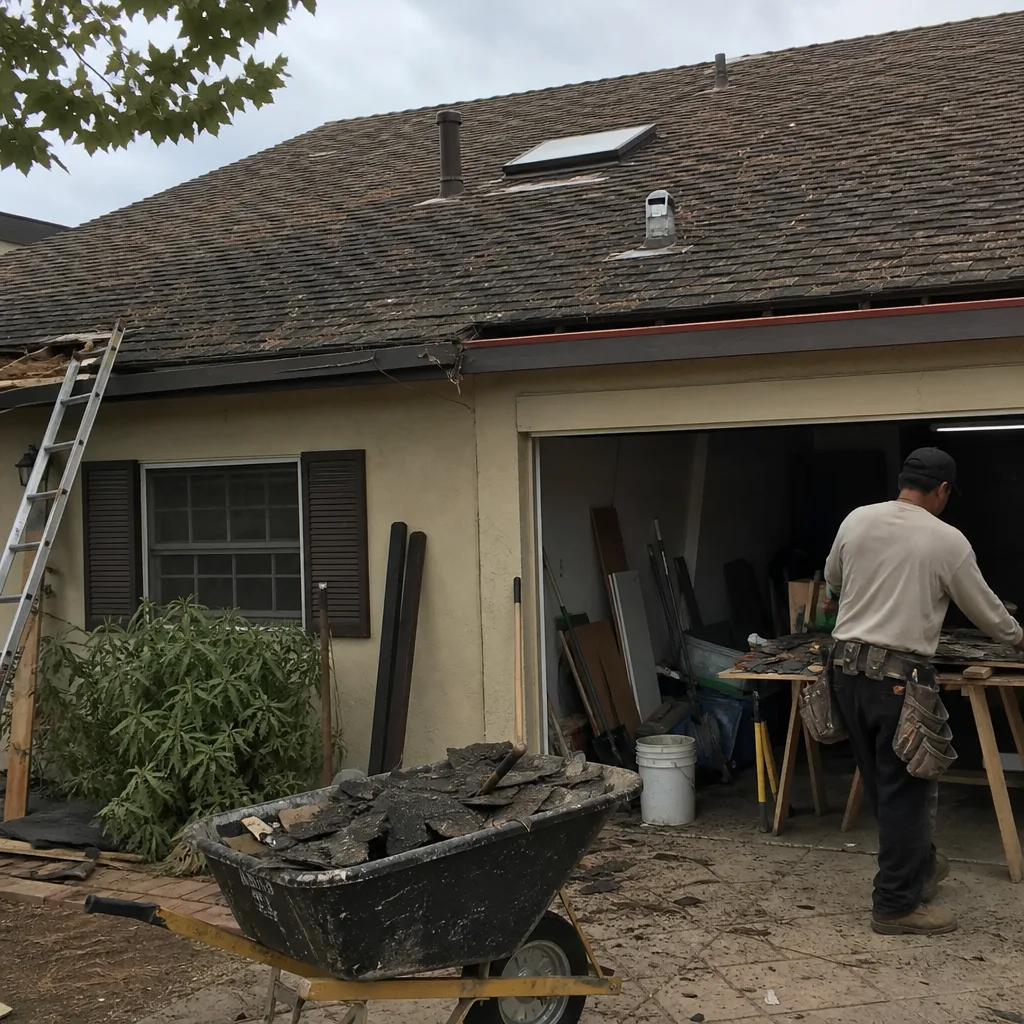
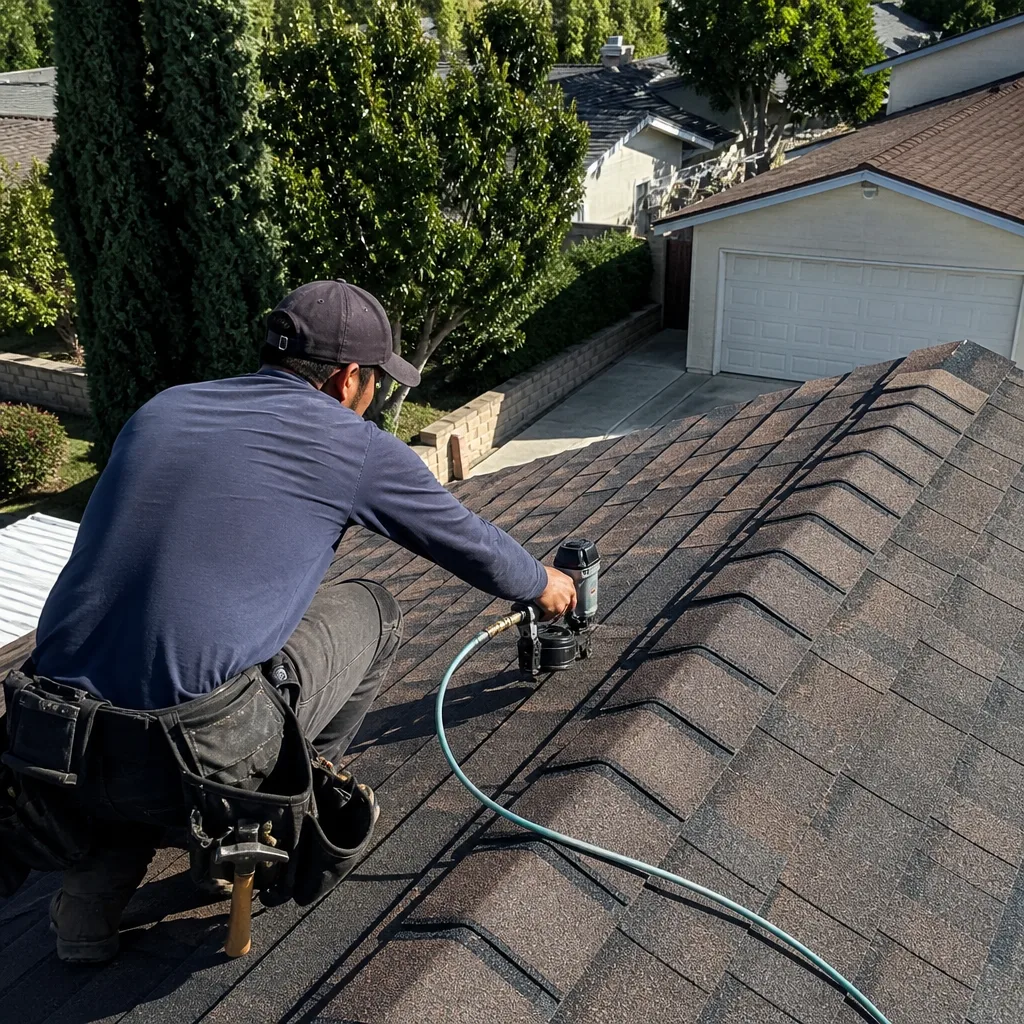
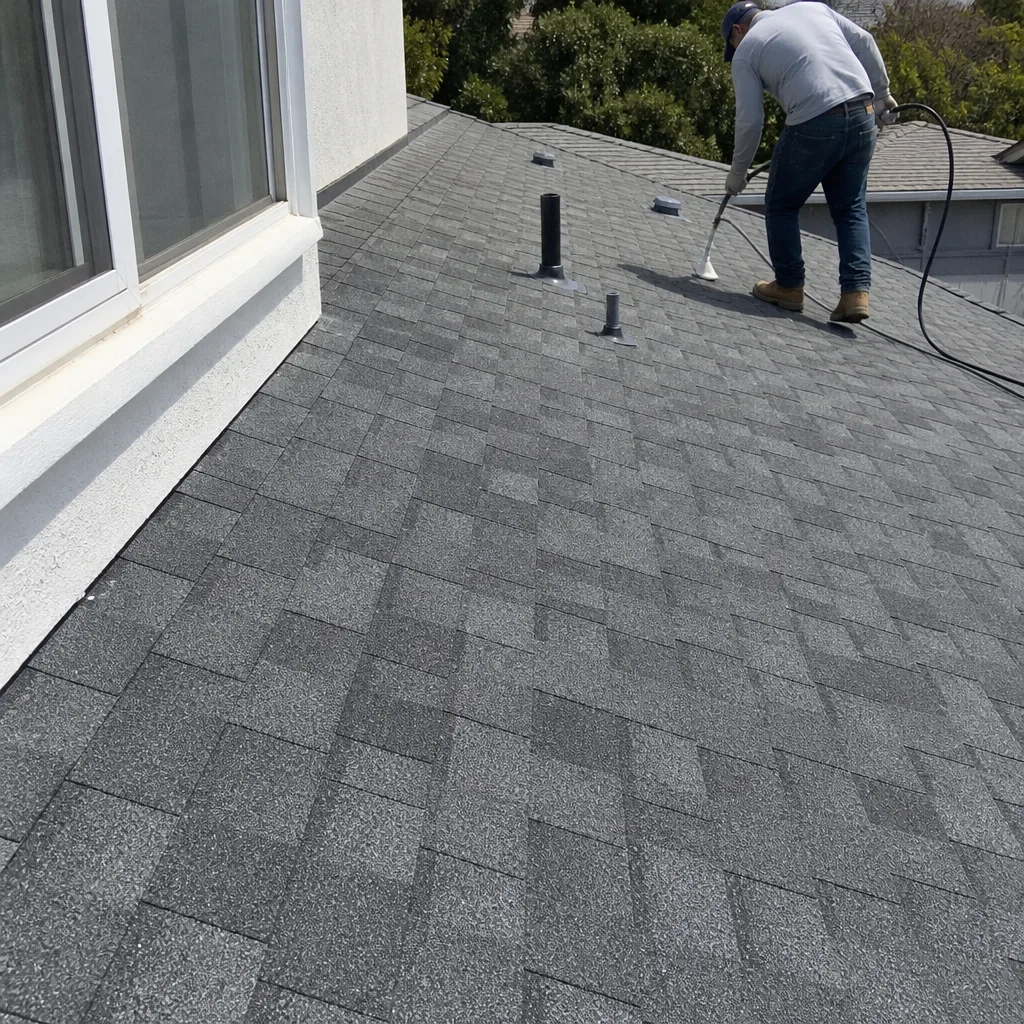
See the difference
 Before
 After
After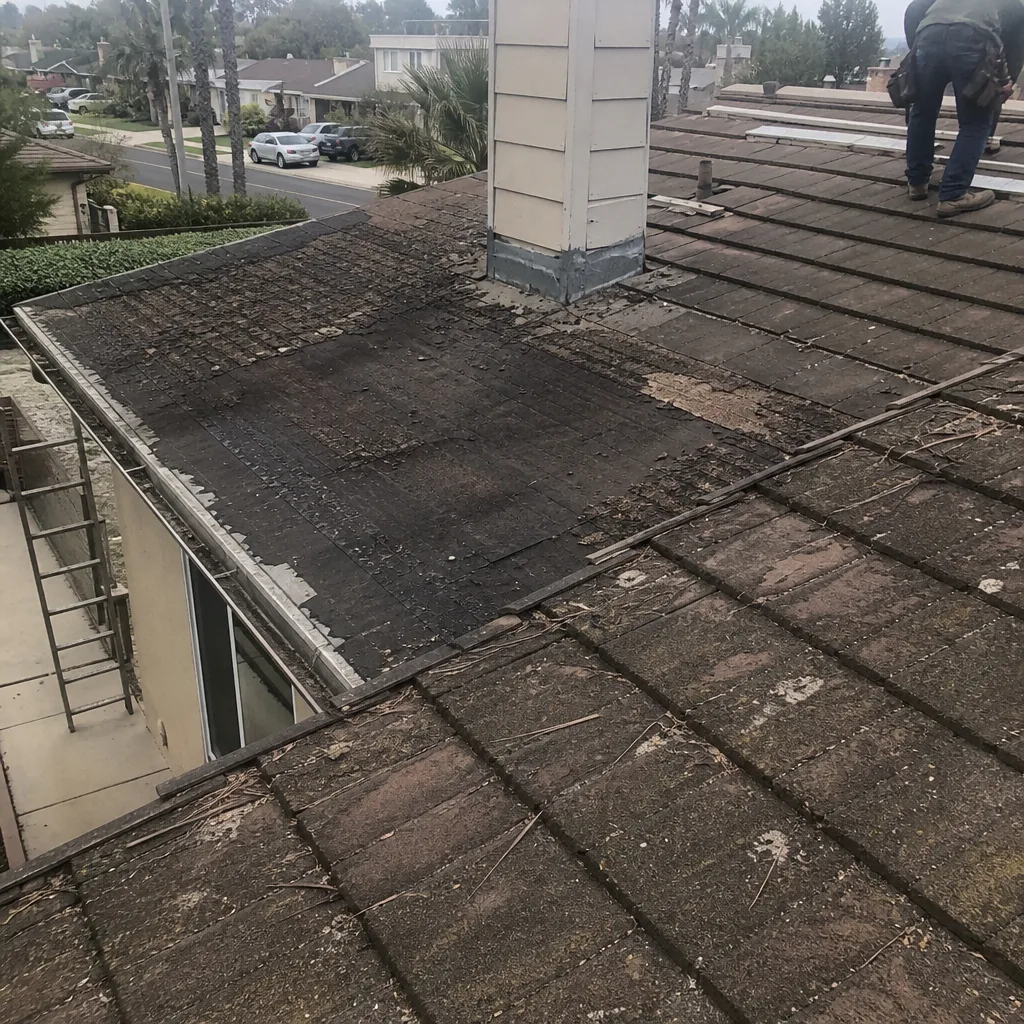 Before
 After
After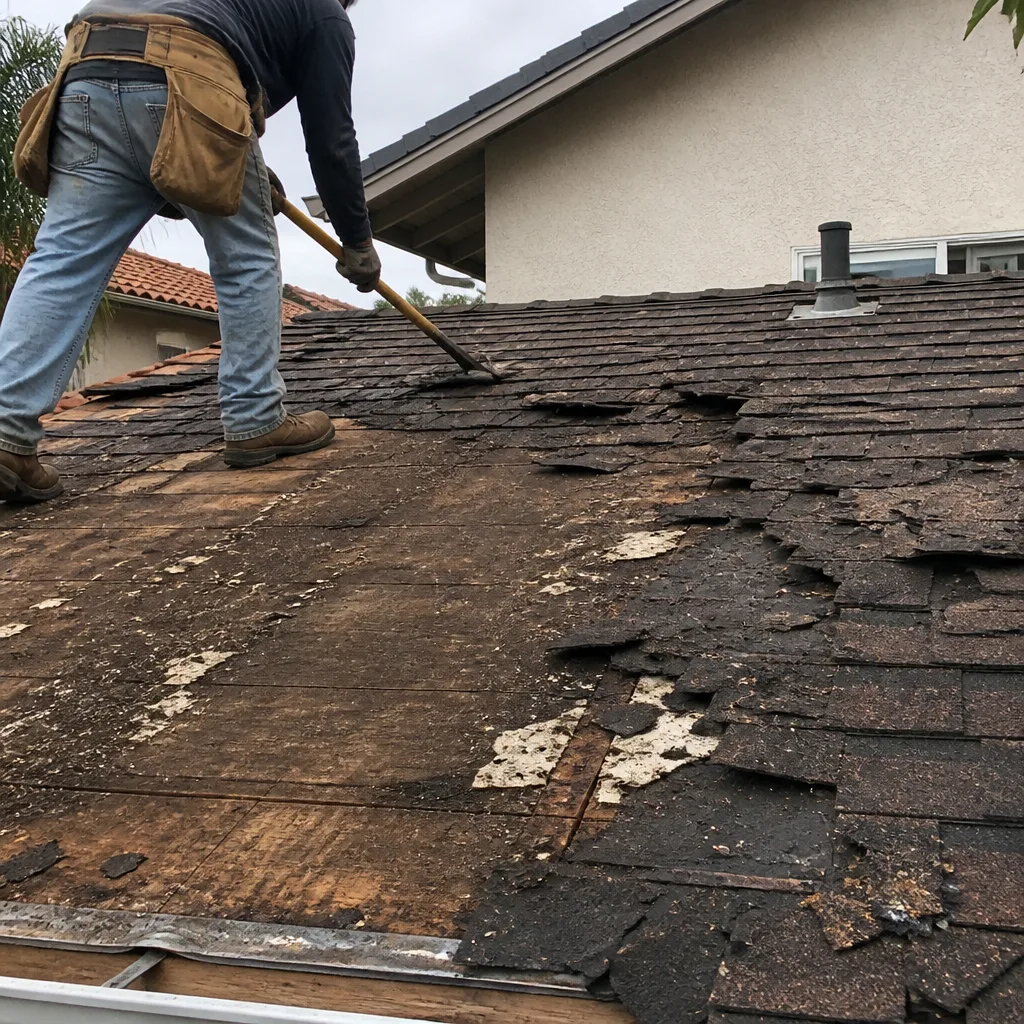 Before
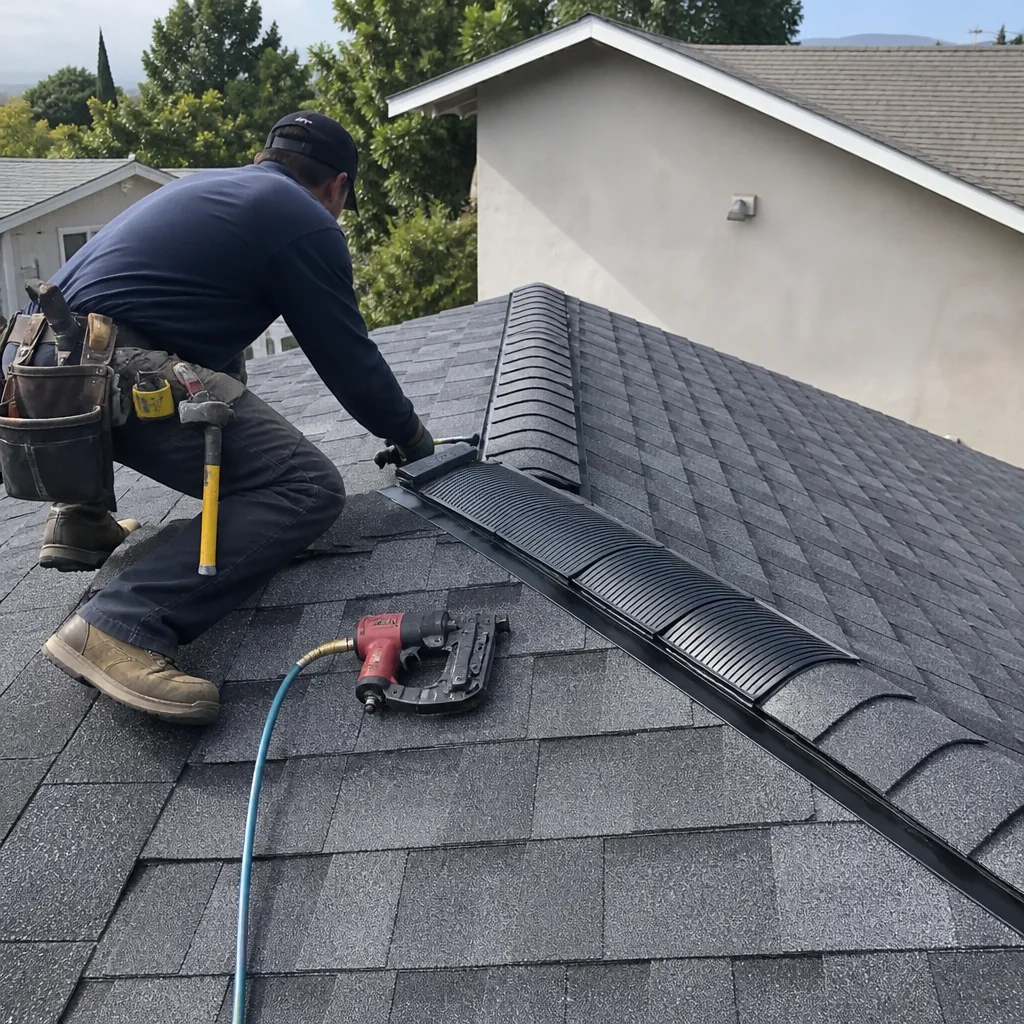 After
AfterWhen to Call a Professional
Some warning signs are for watching and documenting. Others are for calling. Call a roofer in Ventura if you see daylight through the attic around any penetration; if a ceiling stain is growing or reappearing after rain; if granule loss at a valley seam is heavy enough that the underlying asphalt is cracking; if any flashing piece is separated from the chimney, wall, or pipe; if a tile has broken into pieces and shifted out of place; or if attic humidity stays above 70 percent a full day after a storm. The cost of an inspection is small compared to the cost of a roof deck replacement. Roof Installation in Ventura and related services are covered on our site if you want a sense of scope. Crestview Roofing Co Ventura offers free estimates in Ventura, call (559) 249-4917.
Frequently Asked Questions
Most small roof leak repairs in Ventura run between $350 and $900 depending on the cause, with flashing boot replacements at the lower end and valley or chimney work at the higher end. The cost rises sharply when the leak has been active long enough to require drywall, insulation, or decking repair. Call (559) 249-4917 for an exact written quote, and we will put the price on paper before any work begins.
At Crestview, no. The written price we deliver before any work starts is the number on the invoice, period. That is part of the Relay Visibility Guarantee that governs every job we do. If a roofer cannot commit to a written price in advance, that is a signal to keep looking.
Permit requirements depend on the scope of work and the city of Ventura’s current building regulations. For full replacements and major structural repairs, permits are typical, and we handle that process as part of the job. For targeted repairs, permits are often not required, and we will tell you clearly which category your job falls into.
A typical flashing boot replacement, small tile repair, or shingle section repair takes one to three hours on site. More involved valley or flashing repairs can take a full day. We will give you a live arrival time you can track, and photo documentation before and after the work, so you know exactly when we arrived and exactly what was done.
An active leak stain is darker at the edges, irregular in shape, and may feel damp. An old stain is uniform in color, dry, and has stable boundaries. The reliable test is to mark the stain outline with a pencil and check it after the next rain to see if it has grown.
Roofs close to the coast need materials that resist salt air corrosion and tolerate persistent moisture. Tile systems with proper underlayment perform well, as do quality composition shingles from manufacturers like GAF, CertainTeed, or Owens Corning with corrosion-resistant flashing details. The material is only as good as the flashing and underlayment, which is where salt air does its damage first.
The Bottom Line
The roof problem that costs you the most is not the dramatic one you can see from the street. It is the quiet one: the attic humidity spike after rain, the light gap around a vent pipe, the stair-step rust line on step flashing, the granule buildup at the valley seam. Learn what those signals look like, check for them regularly, and document what you find. The difference between catching a roof problem early and finding it at the ceiling stage is usually the difference between a few hundred dollars and a few thousand. If you are seeing any of the signs in this guide, or if you want a professional assessment, call Crestview Roofing Co Ventura at (559) 249-4917 for a free estimate. You can also explore DIY vs Professional Roofing: The Ventura Homeowner’s Decision Guide to decide when to call in help. Written price before any work starts, every time, on every job.
Written by Dylan Pace, Owner at Crestview Roofing Co Ventura, serving Ventura since 2000. Browse more guides & resources on our blog.