
Last updated October 17, 2026
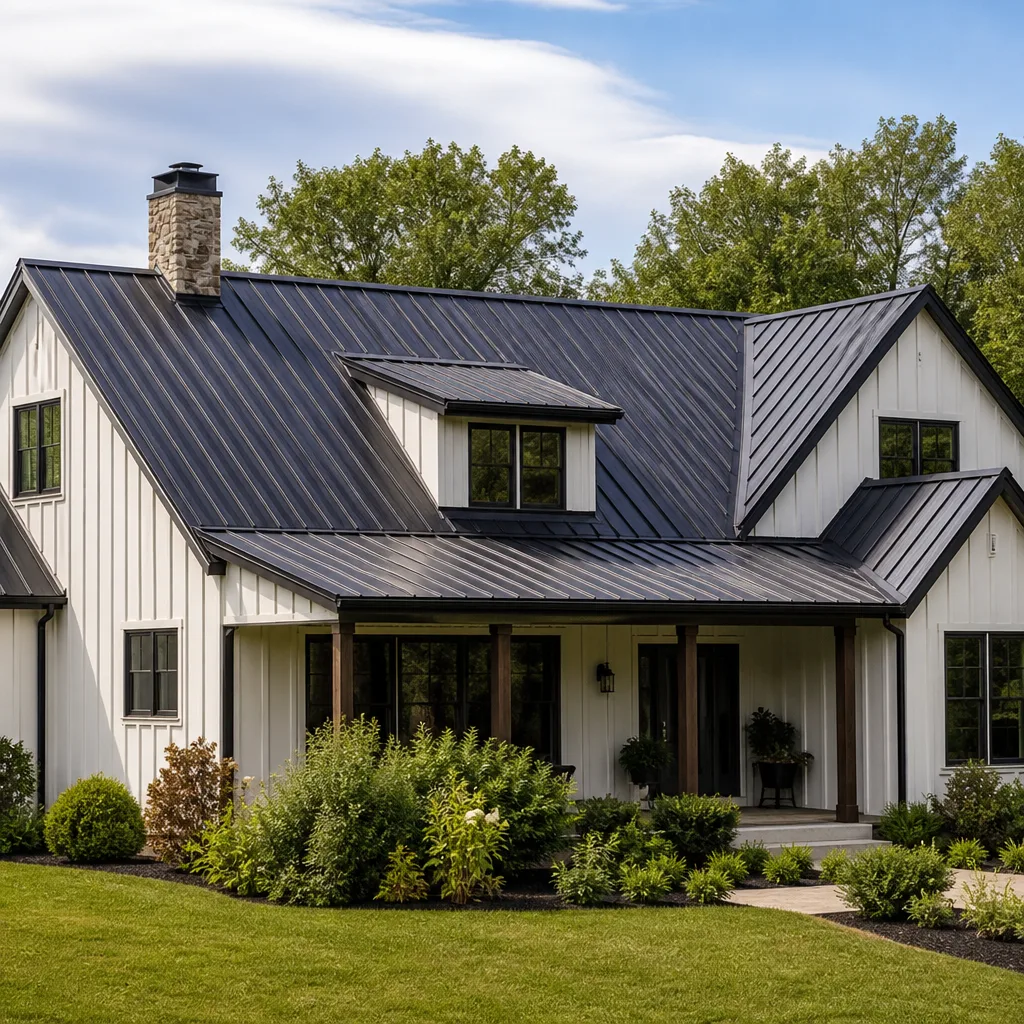 Metal roofing
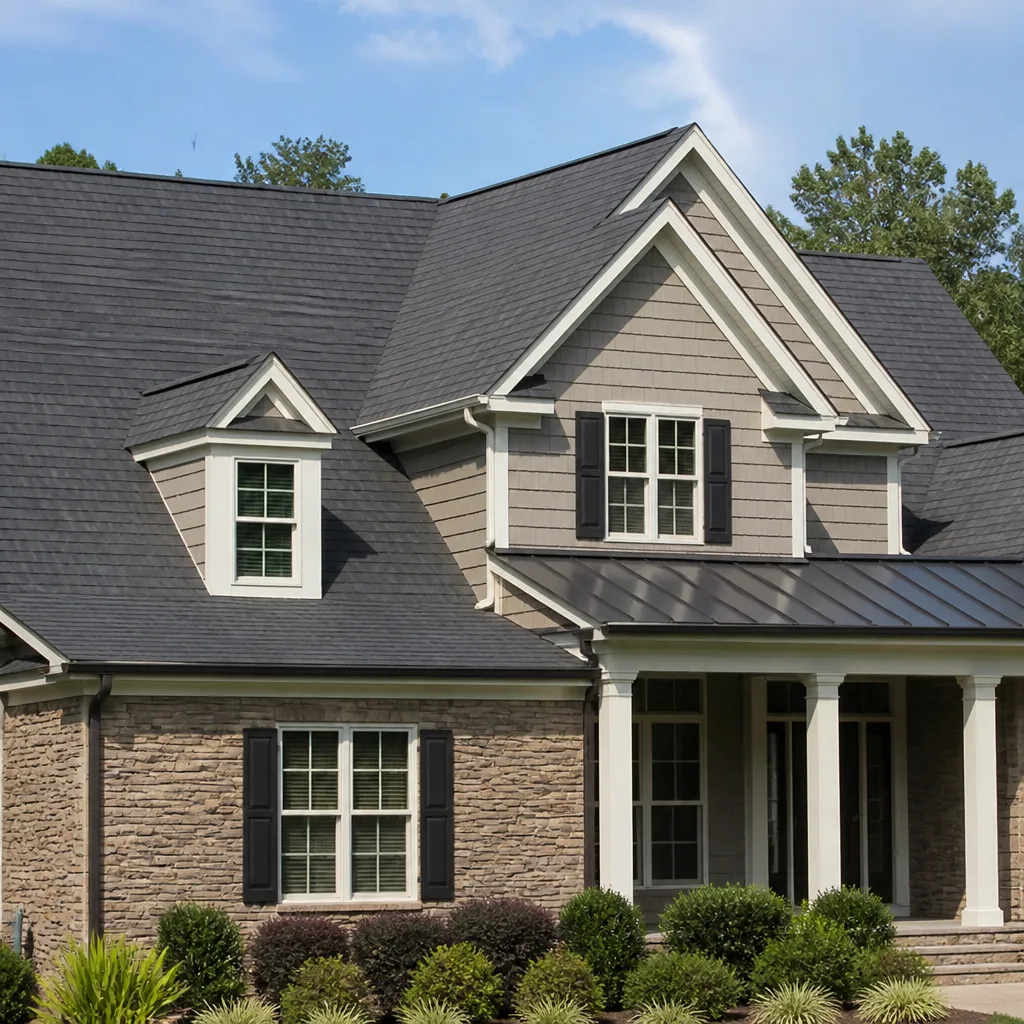 Architectural shingles
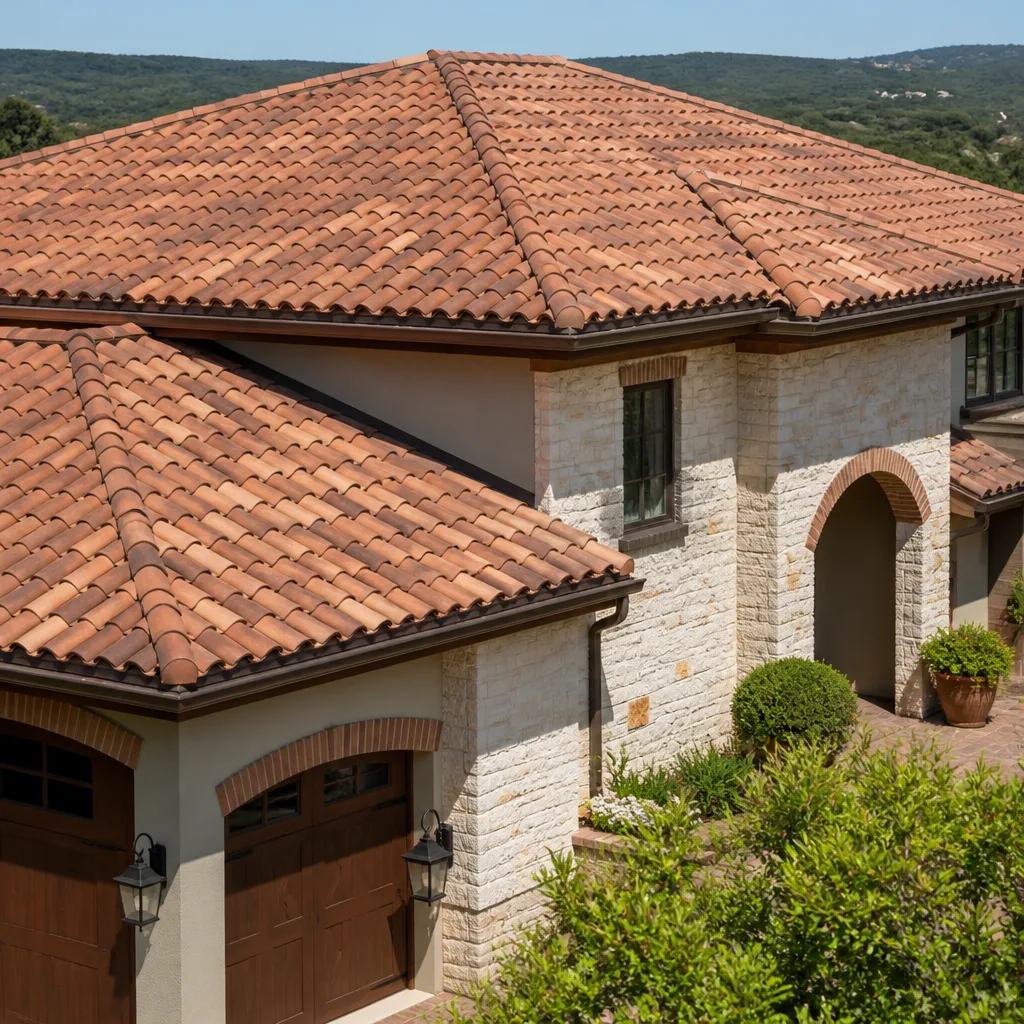 Tile roofing
 GAF
GAF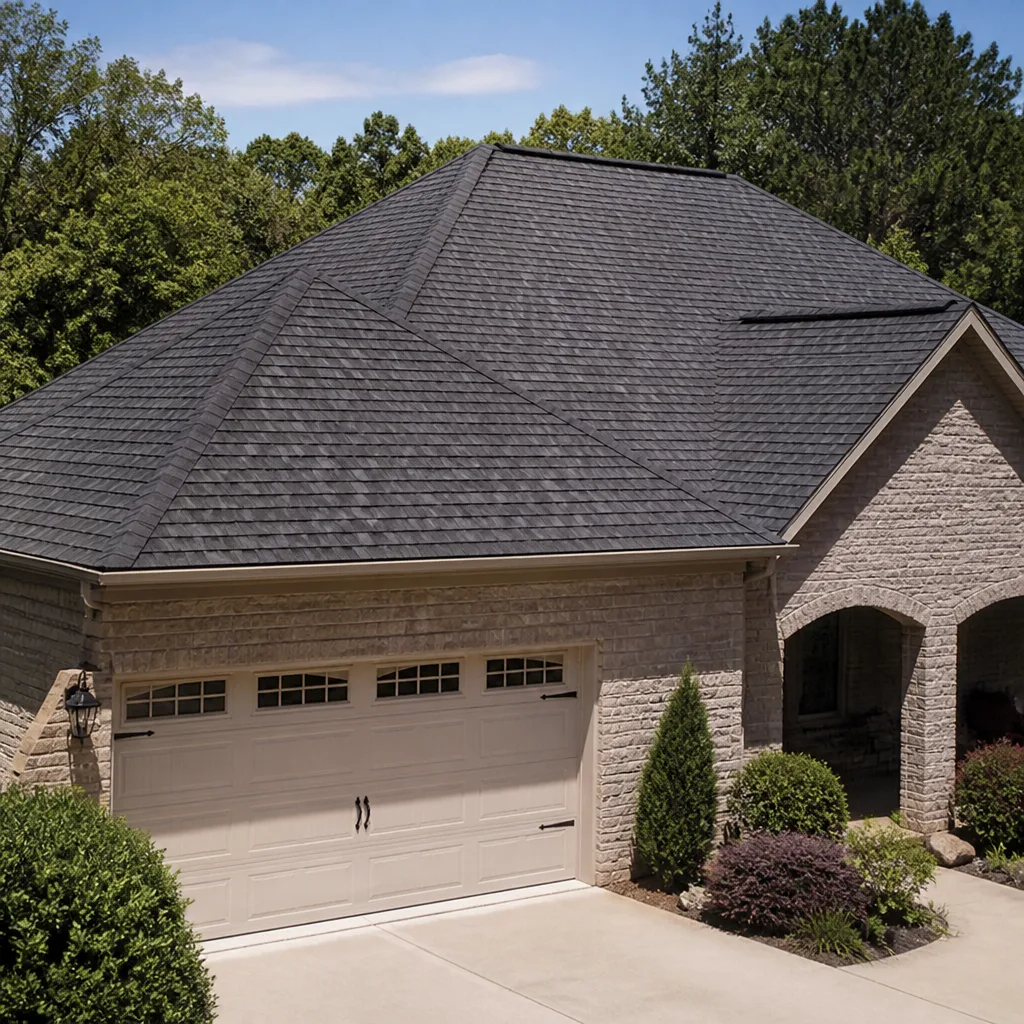 Owens Corning
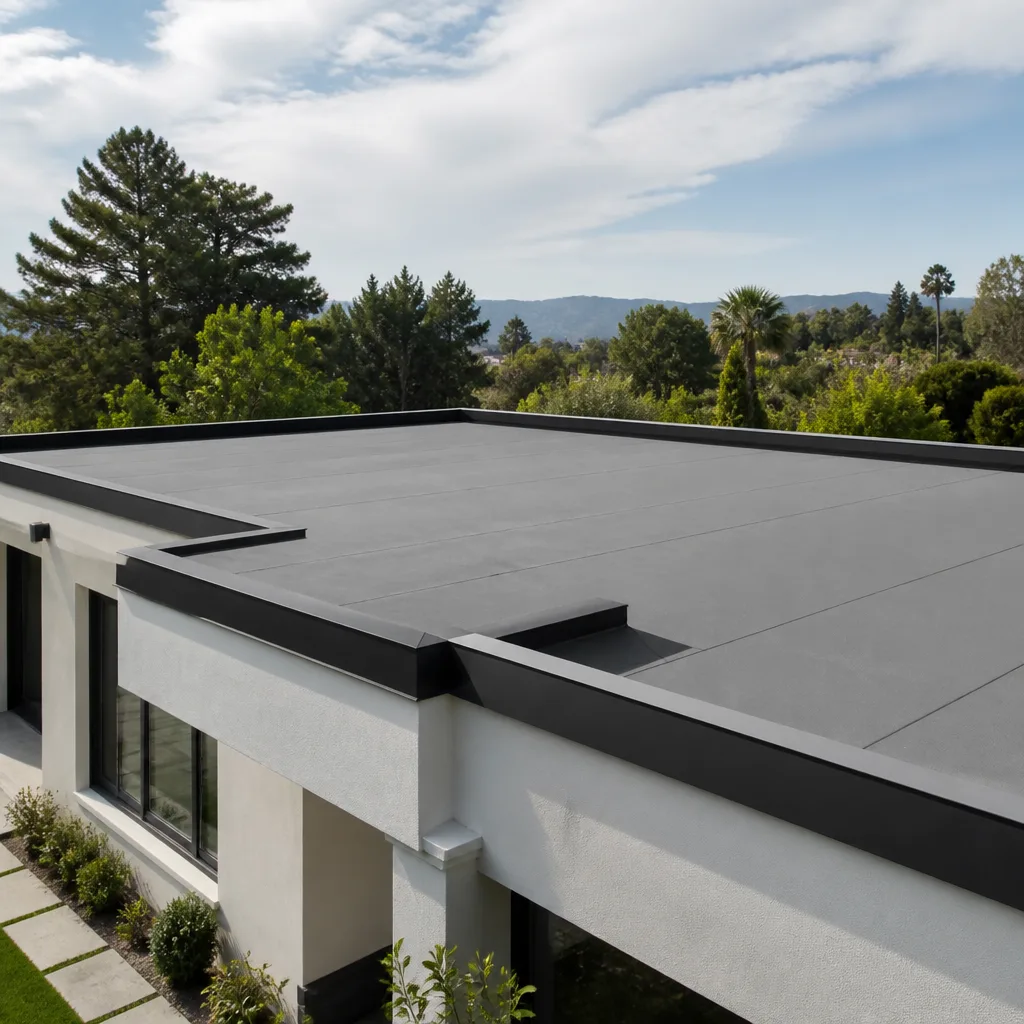 Flat & low-slope
Free roof inspection with deck photos before we talk money - GAF and Owens Corning certified installation
The Complete Guide to Roofing in Ventura
Most roofing guides written for “Southern California” were drafted with Los Angeles or San Diego in mind. Ventura sits in a different pressure zone, gets a different wind pattern, and its roofs fail in different places. The marine layer that rolls in most mornings isn’t just fog – it’s a moisture delivery system that feeds moss and algae on north-facing slopes. Salt air from the Pacific corrodes flashing within a mile of the coast. And when the Santa Anas blow, they hit Ventura roofs from a direction most generic wind ratings don’t account for. This guide covers what actually happens to roofs in Ventura, what repairs and replacements cost here, and how to read an estimate so you know exactly what you’re paying for before anyone climbs a ladder.
Quick Answer
Roofing in Ventura means managing three specific forces: marine-layer moisture, salt-air corrosion, and Santa Ana wind uplift. Most asphalt shingle roofs in Ventura last 18 to 25 years, but only when they’re installed with the right coastal materials – algae-resistant shingles, stainless or copper flashing, and wind-rated fastening patterns. Repairs here typically run $350 to $900, a full reroof on a standard 1,800-square-foot Ventura home runs $9,000 to $16,000, and the single most important thing you can do as a homeowner is demand a written price before any work starts.
Styles & brands we work with
Table of Contents
- Why Ventura’s Climate Is Harder on Roofs Than Most Guides Admit
- Wind Uplift Ratings: What Ventura’s Coastal High Wind Zone Actually Requires
- Salt-Air Corrosion: Which Flashing Metals Survive Near the Pacific
- Choosing Roofing Materials for Ventura: What Holds Up, What Doesn’t
- How Much Roof Repair Costs in Ventura
- How Much a Full Roof Replacement Costs in Ventura
- How to Read a Ventura Roofing Estimate Line by Line
- Why Written Prices and Photo Documentation Protect You
Why Ventura’s Climate Is Harder on Roofs Than Most Guides Admit
Ventura gets about 15 inches of rain a year, which sounds mild until you factor in the marine layer. Between May and August, coastal Ventura neighborhoods – think Pierpont, Midtown, and anything west of the 101 – wake up to damp, heavy fog most mornings. That fog sits directly on roof surfaces for hours, keeping them wet long after the sun burns off at ground level.
What that means for shingles is specific: north-facing roof sections stay damp longer than south-facing sections, sometimes by four to six hours per day. That extended moisture window is exactly what algae and moss need to establish. We’ve inspected roofs in the Ventura hills where the south slope looks nearly new and the north slope carries a full carpet of dark staining within six years of install. The staining isn’t cosmetic – algae holds moisture against the shingle granules and shortens the useful life of the mat underneath.
The practical takeaway: if you’re choosing shingles for a Ventura roof, pick a product with copper or zinc oxide embedded in the granules. GAF’s StainGuard Plus and CertainTeed’s StreakFighter are two algae-resistant lines that hold up in the marine layer environment. The algae resistance isn’t a marketing label – it’s the difference between a roof that looks 10 years old at year five and one that still looks recent at year 12.
Another Ventura-specific factor: the marine layer is not spread evenly across the city. East Ventura, Saticoy, and anything past Kimball Park typically gets less fog than the beachside neighborhoods. That doesn’t mean you skip algae-resistant materials east of Victoria – it means you have more leeway with product selection and steeper slopes that drain faster.
Wind Uplift Ratings: What Ventura’s Coastal High Wind Zone Actually Requires
Ventura sits inside a coastal High Wind Zone under California building code, which means roofs here have to meet a minimum wind uplift rating that most inland cities can ignore. The broad requirement is that any roof within a certain distance of the coast must be fastened to resist higher pressures than a comparable roof in, say, Oxnard’s inland stretches or Santa Paula.
The failure point most homeowners never hear about is standard 3-tab shingles. These are the cheapest asphalt shingle on the market, and they’re rated for lower wind speeds than architectural shingles. In Ventura’s Santa Ana conditions, a 3-tab roof near the foothills or along the 126 corridor can lose shingles in a single wind event, even when the install was done correctly. Architectural shingles – the dimensional, thicker-profile product – carry higher wind ratings and simply don’t flex and peel the same way.
When you’re comparing estimates, look for the wind rating in writing. GAF Timberline and CertainTeed Landmark lines are tested to 130 mph wind uplift when installed with the manufacturer’s high-wind fastening pattern, which means six nails per shingle instead of the standard four, plus specific starter strips and adhesive. The pattern matters as much as the product. A top-tier shingle nailed four times in a High Wind Zone is still under-fastened.
One thing we see often after winter storm cycles: roofs that meet code but were installed without the extra step of sealing the shingle tabs. In a Santa Ana event, wind gets under the leading edge of shingles and lifts them before the sun has had a chance to fully cure the adhesive strip. The fix is mechanically fastening the first course and using a proper starter strip along every edge. If your current roof is missing shingles after a wind event, that’s the diagnosis in about eight out of ten cases.
For homeowners within a mile of the coast, the code requirement is firm: your roof deck, underlayment, and shingle fastening must all be rated for the coastal uplift zone. A contractor who doesn’t bring up wind ratings during an estimate in Ventura is skipping the most important local variable. Ask them point blank: “What wind rating are you installing to, and how many nails per shingle?” Our How to Hire a Roofing Contractor in Ventura: A Step-by-Step Guide covers the other critical questions to ask before you sign.
Salt-Air Corrosion: Which Flashing Metals Survive Near the Pacific
Flashing – the metal strips that seal the joints around chimneys, vents, skylights, and where roof planes meet walls – is where salt air does its worst work. Within a mile of the Ventura coastline, the air carries enough chlorides to corrode standard galvanized steel flashing in five to eight years. Once flashing rusts through, water gets into the roof system at the exact points where shingles alone can’t seal the transition.
The metal choice matters more than most homeowners realize:
- Galvanized steel: The cheapest option and the most common in inland installs. In coastal Ventura, expect visible rust within five years if it’s thin-gauge. Pass on it within a mile of the ocean.
- Aluminum: Corrosion-resistant but soft. Aluminum flashing holds up to salt better than galvanized steel, but it dents easily and can react with certain wood treatments and concrete. It’s a middle ground, not a top pick.
- Stainless steel: The workhorse for Ventura’s coastal zone. 304 stainless handles marine air without meaningful corrosion for 20-plus years. It costs more than galvanized – roughly 20 to 30 percent more on the flashing portion of a job – but it nearly eliminates premature flashing failure as a leak source.
- Copper: The gold standard for coastal durability. Copper flashing and copper drip edges routinely last 40-plus years within sight of the Pacific. It develops a patina that actually protects the underlying metal. The premium is real, though: copper flashing can add several hundred dollars to a typical roof, and on a full reroof with complex geometry, that number climbs.
Here’s a Ventura-specific reality: roofers who mostly work inland – Camarillo, Moorpark, Thousand Oaks – sometimes stock galvanized flashings as their default because that’s what their typical job site tolerates. When they quote a beachside Ventura job with the same material, the roof will function properly for a few years, and then the flashings will start to fail.
If you live in Pierpont, the Ventura Keys, or along Seaward Avenue, ask your roofer specifically which flashing material is in the quote. You want to see “304 stainless” or “copper” on the line item, not just “metal flashing.”
Choosing Roofing Materials for Ventura: What Holds Up, What Doesn’t
Ventura homeowners have three broad material choices, and each behaves differently under the marine layer, salt air, and Santa Ana wind combination.
Asphalt architectural shingles are the dominant choice for a reason: they balance cost, lifespan, and wind performance. In Ventura, an architectural shingle roof from GAF, CertainTeed, or Owens Corning typically runs 18 to 25 years when installed with algae-resistant granules and proper wind fastening. Within this category, skip the 3-tab product entirely – the wind uplift issue discussed above makes it a poor value in coastal Ventura, even though it’s the cheapest upfront.
Concrete tile and clay tile are popular in Ventura’s Spanish-style homes, especially in the hillsides off Foothill Road and around Ondulado. Tile handles salt air well – concrete and clay don’t corrode – but the underlayment beneath the tile is the failure point. On a tile roof, the visible tile is a wear surface, not the waterproofing system. The underlayment, a water-resistant barrier installed over the roof deck, needs replacement every 20 to 30 years, sometimes sooner in the damp marine layer. Tile reroofs in Ventura cost two to three times what an asphalt reroof runs, partly because of the underlayment work and partly because tile removal and reinstallation are more labor-intensive.
Metal roofing – standing seam or metal shingles – is a smaller share of the Ventura market but growing. Standing seam holds up against salt air when the panels are made from coated steel or aluminum. The critical detail is the fastener and clip system: exposed fasteners rust quickly in coastal air, so you want a concealed fastener system. Expect a metal roof in Ventura to cost $18 to $30 per square foot installed, which puts it at the top end of the pricing spectrum, with a service life that often exceeds 40 years.
One material we steer Ventura homeowners away from is wood shake without a specific, high-maintenance plan. In the marine layer, wood shake holds moisture and grows moss aggressively. It’s also a fire-risk material in a region with Santa Ana-driven wildfire seasons. Ventura’s fire zone maps make wood shake a poor fit for most hillside properties, and many insurance carriers now charge a premium for homes with wood roofs.
How Much Roof Repair Costs in Ventura
Roof repair in Ventura is priced by the specific failure, not by a flat rate, but you can still walk in with realistic expectations. Most standard repairs – the kind we see weekly across Ventura – run between $350 and $900. That range covers common failures: a slipped or cracked tile, a rusted-through section of flashing around a vent pipe, a small shingle patch, or a reseal around a skylight.
Several factors push a repair higher:
- Roof pitch. Steep roofs – common on Ventura hillside homes – require safety harnesses and slower work. Expect a 15 to 30 percent premium over the same repair on a walkable roof.
- Two-story access. A repair on a two-story section costs more than the identical problem at single-story height, simply for ladder setup and staging.
- Tile roofs. Matching an existing tile roof in Ventura means sourcing replacement tiles that match color and profile. If the original tile is discontinued – common on homes built in the 1970s and 80s – expect a markup or a visible color mismatch.
- Dry rot beneath the surface. Ventura’s moisture-rich air means roof leaks here often hide decking damage. When the roofer pulls back shingles and finds rotted plywood or OSB, the repair expands from a shingle patch to a structural fix.
Here’s the repair cost table we use when talking to Ventura homeowners:
| Repair Type | Typical Ventura Range |
|---|---|
| Small shingle patch (3-5 shingles) | $250 – $450 |
| Flashing replacement (vent pipe) | $300 – $600 |
| Chimney flashing reseal | $500 – $900 |
| Skylight reseal | $400 – $800 |
| Leak investigation + minor repair | $350 – $700 |
| Decking replacement (per sheet) | $90 – $150 per sheet |
Every number on that table assumes a straightforward repair on a single-story, walkable roof. Your exact price depends on what the roofer finds when they get up there – which is exactly why a written, itemized estimate matters. If a roofer gives you a verbal number and the invoice comes in 40 percent higher, you have no documentation to challenge it. If the price is in writing and the roofer finds hidden decking damage, you’ll see the specific line item that changed and why.
For a deeper breakdown of repair pricing and what to expect, see our Roof Repair in Ventura guide.
How Much a Full Roof Replacement Costs in Ventura
For a standard 1,800-square-foot single-story Ventura home, a full asphalt shingle roof replacement – tear-off, new underlayment, new flashing, and new architectural shingles – typically runs $9,000 to $16,000. That’s a wide range because Ventura spans a lot of roofing conditions. A simple ranch in east Ventura with an easy-pitch roof sits at the bottom of that range. A two-story beachside home with steep angles, tile accents, and complex flashing sits at the top or beyond it.
The major line items in a Ventura roof replacement:
- Tear-off and disposal. Removing the existing roof and hauling it away. On a standard ranch, this runs $1,500 to $2,500. Tile tear-off runs higher than shingle tear-off because of the weight and the labor of separating reusable tiles.
- Decking repair. The plywood or OSB that sits under your shingles. After decades of Ventura’s marine layer, some boards will be water-damaged along the edges, and those get replaced at $90 to $150 per sheet as the work exposes them. A roof with extensive dry rot can add $1,000 to $3,000 to the final number.
- Underlayment. The water-resistant barrier between the decking and the shingles. Modern synthetic underlayment runs roughly $0.25 to $0.50 per square foot installed.
- Shingles and fastening. Architectural shingles run $4 to $7 per square foot installed, including the shingle itself, fasteners, starter strips, and ridge caps. The brand and wind-rating tier drive the price: high-wind GAF or CertainTeed lines sit at the top of that range.
- Flashing. Stainless steel or copper flashing adds a few hundred dollars over galvanized. For coastal Ventura homes, we recommend it without hesitation.
- Permits. Ventura requires a permit for full reroofs. The permit fee is typically $200 to $400 depending on the valuation of the job, and it includes the required inspections during and after the install.
Tile roof replacement in Ventura runs substantially higher, usually $20,000 to $40,000 depending on the size and complexity, because of the underlayment replacement and the labor of reusing or replacing tiles. Metal standing seam falls in the $25,000 to $50,000 range for a typical Ventura home.
For a complete walkthrough of replacement pricing, timeline, and what changes the number, see our Roof Replacement in Ventura page.
How to Read a Ventura Roofing Estimate Line by Line
Most roofing disputes in Ventura start with an estimate that wasn’t read carefully. Roofers use trade shorthand that homeowners haven’t learned, and the gaps in the quote are where surprise charges come from. Here’s what each line means in plain English, and what to check for.
Tear-off. This is the removal of your old roof. In a full roof replacement, tear-off covers removing the old shingles, old underlayment, and old flashing, then hauling everything away. If your estimate says “re-roof” without specifying “tear-off,” you’re looking at a quote for a roof-over – laying new shingles on top of old ones. Roof-overs are cheaper and faster, but they trap existing damage, add weight, and often void the new shingle manufacturer’s warranty. In Ventura’s coastal climate, where hidden moisture damage is common, a roof-over is a false economy.
Decking. This is the wood layer under the shingles, typically plywood or OSB. A good estimate will include a line item for decking replacement at a specified per-sheet price, with the note that replacement is conditional on what’s found after tear-off. That conditional language is honest – the roofer can’t see the decking until the shingles come off. What you want to avoid is an estimate that doesn’t mention decking at all. If the decking is rotted and the roofer has to bill it at an undisclosed rate after the fact, you lose negotiating power.
Drip edge. This is the metal trim that runs along the edges of the roof, directing water away from the fascia and the roof deck. It’s small, cheap, and critical. In Ventura’s marine air, the drip edge should be stainless steel or at minimum a heavy-gauge coated metal – not thin galvanized stock that will rust through in five years. If your estimate lists “drip edge” without specifying the metal, ask.
Underlayment. In older-style estimates, this is called “tar paper” or “felt.” Modern synthetic underlayment is more tear-resistant and hydrophobic than felt, and it’s the standard for coastal moisture conditions. If the estimate still says “15 lb felt,” that’s fine for code minimums, but synthetic is a meaningful upgrade for the marine layer environment.
Starter strip. A strip of shingles or special adhesive material applied along the eaves and rakes before the field shingles go on. It’s the wind-lift defense at the edge of the roof. An estimate that skips the starter strip line item is cutting a corner that matters most in Santa Ana season.
Ridge cap. The specially-shaped shingle pieces that cover the peaks and hips of the roof. They’re a small premium over field shingles, but they’re the first thing to fail in high wind if someone tried to cheap out by bending regular shingles over the ridge.
What’s missing from a Ventura estimate, not what’s on it, is often the real story. Check for: the wind-rating spec, the flashing material specified by name, the permit line, and the disposal fee. A complete Ventura estimate will be several pages. A one-page number with no line items is a red flag.
Why Written Prices and Photo Documentation Protect You
Roofing is one of the few home improvements where the homeowner can’t easily inspect the work after it’s done. You can walk through a remodeled kitchen and open every drawer. You can’t walk around on your own roof, and even if you could, most homeowners can’t evaluate nail patterns or flashing laps. That’s why written prices and photo documentation matter more in roofing than in any other trade.
The Relay Standard – the service model that governs every Crestview Roofing job – exists because roofers have historically operated without documentation. A written price before any work starts means the number on the page is the number on the invoice. Before-and-after photos mean you can see what the roof looked like when the crew arrived and what it looked like when they left, including the areas you’d never climb a ladder to check.
For insurance claims, the photo record is especially valuable. If a storm damages your Ventura roof in January and the carrier disputes the claim in March, you have a dated record of the roof’s condition. Same for warranty work: if a repair fails within the coverage window, the “before” photos establish what condition the roof was in before the repair, and the “after” photos establish what the finished work looked like. There’s no “we didn’t say that” from either side.
Dylan Pace, who leads Crestview Roofing Co Ventura home, started documenting every job this way because the industry’s standard practice was the opposite: a handshake, a verbal number, and an invoice that arrived weeks later with line items the homeowner had never seen before. The documentation standard isn’t about distrust – it’s about giving the homeowner the same visibility they’d expect from any other service they book from their phone.
The takeaway for any Ventura homeowner, whether you work with us or someone else: get the price in writing before work starts, and get photos before and after. If a roofer refuses either, that tells you more than any estimate line item ever will.
Common Mistakes to Avoid
- Accepting a roof-over instead of a tear-off. A roof-over hides the moisture damage that Ventura’s marine layer has been quietly creating for years. You’ll spend less now and more later, and the shingle manufacturer’s warranty won’t apply to a roof-over install in most cases.
- Choosing standard 3-tab shingles in a coastal High Wind Zone. The upfront savings disappear with the first Santa Ana wind event that strips shingles from your eaves. Architectural shingles with the right fastening pattern are the minimum in Ventura.
- Not asking about flashing material on a beachside home. Galvanized steel flashing within a mile of the Pacific rusts through in five to eight years. Specify stainless or copper and verify it’s on the written estimate.
- Skipping the permit on a full reroof. Unpermitted roof work creates problems when you sell: the buyer’s inspector flags it, and you’re forced to retroactively pull a permit at higher cost. The permit also gives you the city inspection, which is a second set of eyes on the work.
- Trusting a verbal quote. Without a written price, there’s no documentation if the final invoice exceeds the initial number. Every legitimate Ventura roofer will put the number in writing; a refusal is a red flag.
- Ignoring algae resistance. North-facing roof sections in Ventura’s marine layer will stain and grow moss within a few years on non-treated shingles. The small premium for algae-resistant granules pays for itself in extended shingle life.
- Not checking the underlayment age on a tile roof. Tile roofs in Ventura fail at the underlayment, not the tile. If your tile roof is over 25 years old and the underlayment has never been replaced, you’re likely living with a waterproofing system that’s already failed or about to.
See the difference
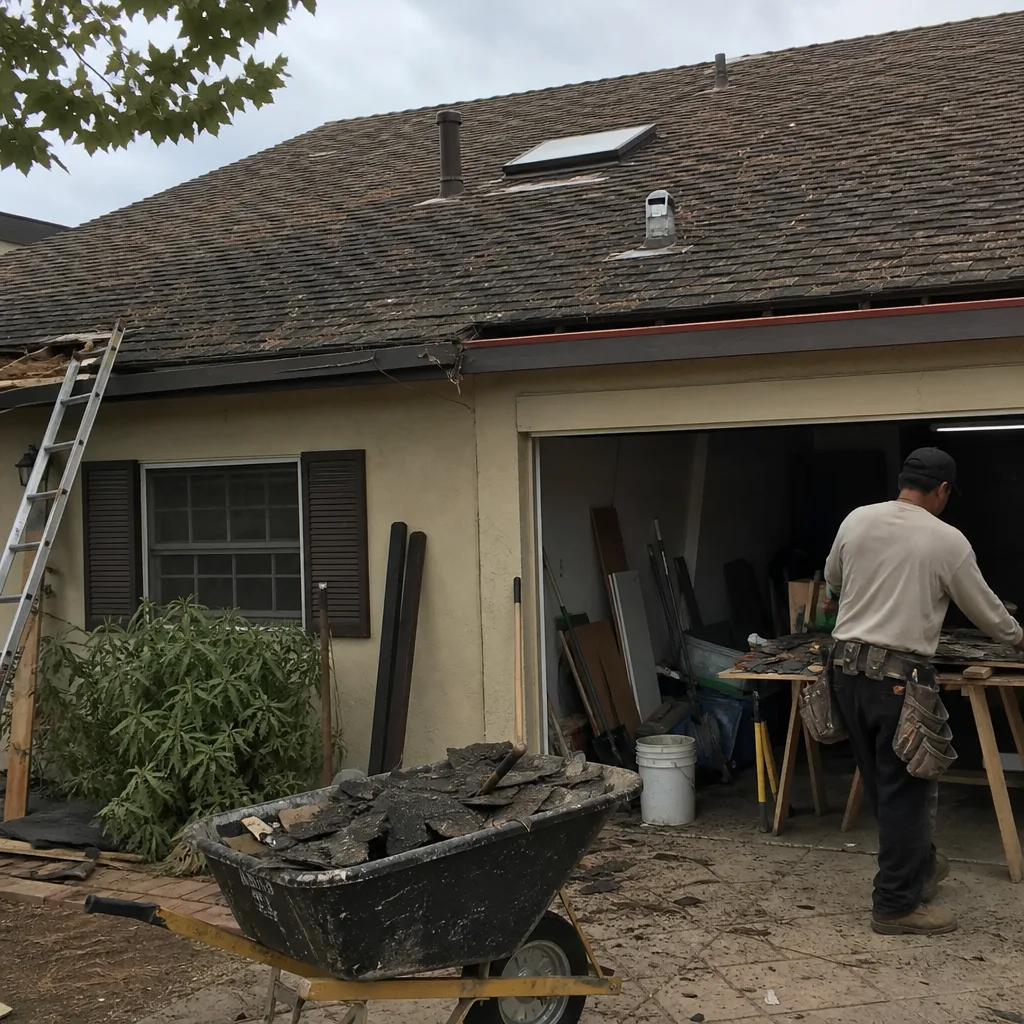 Before
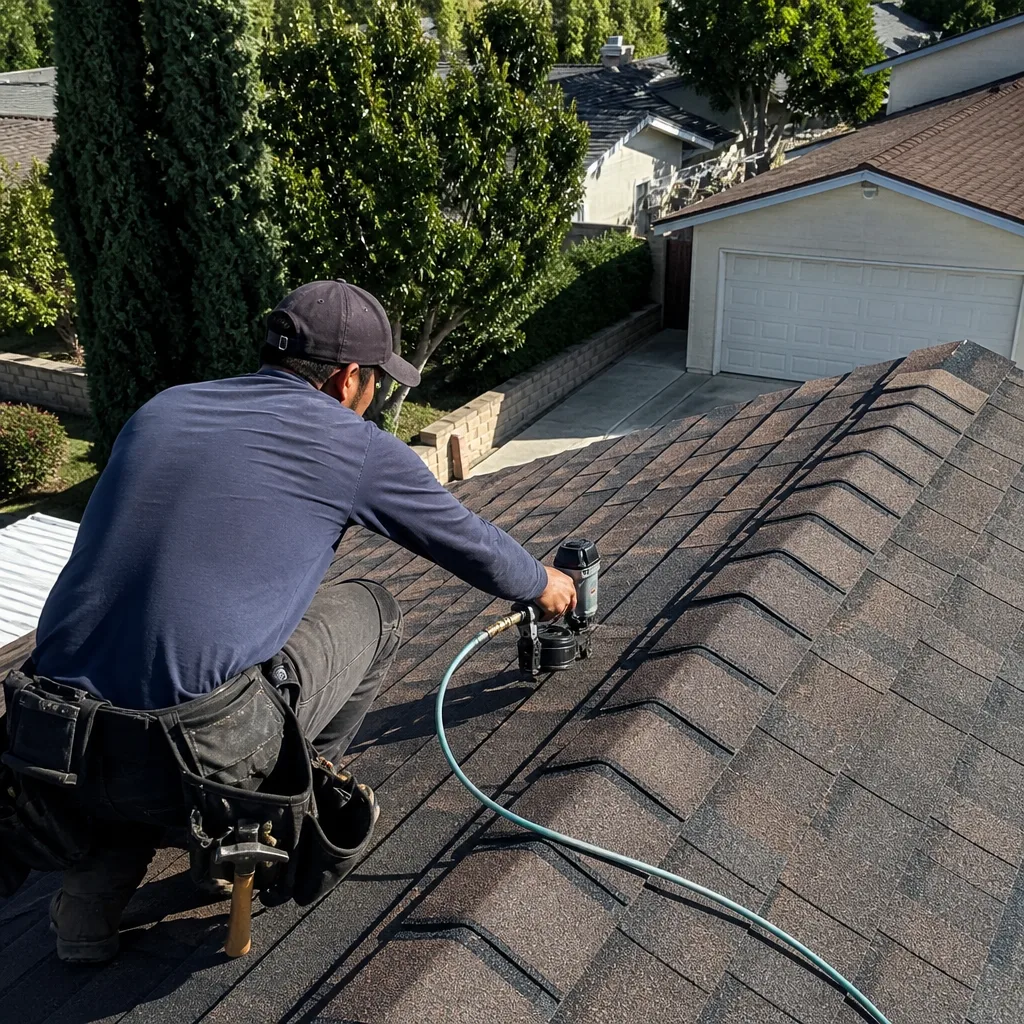 After
After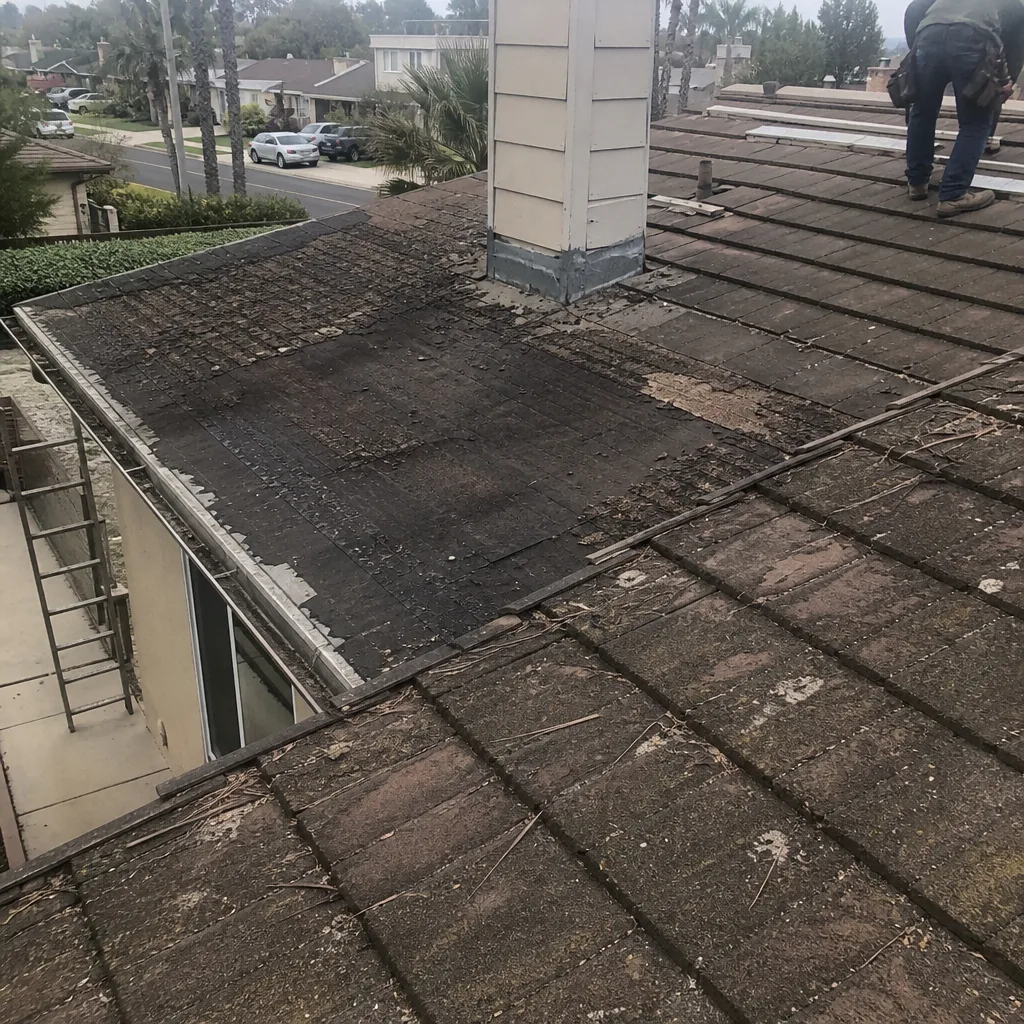 Before
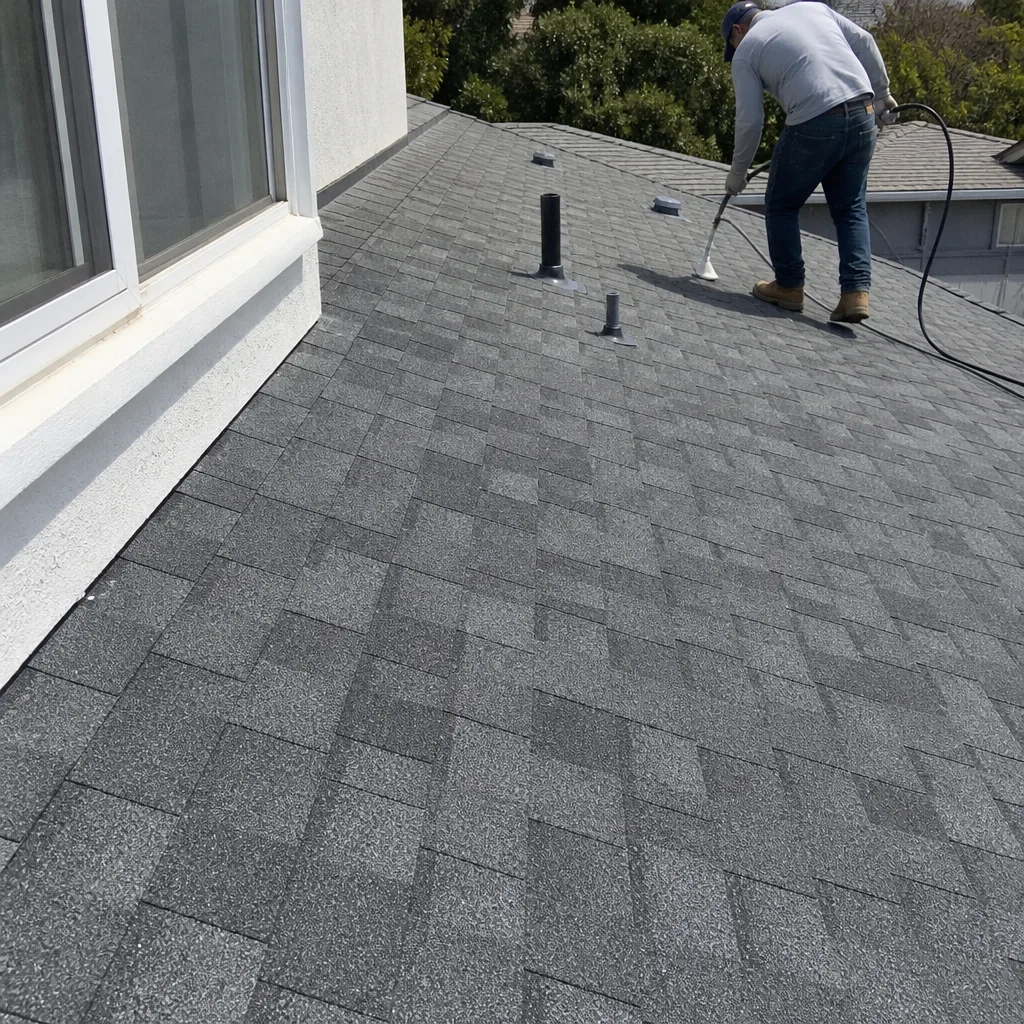 After
After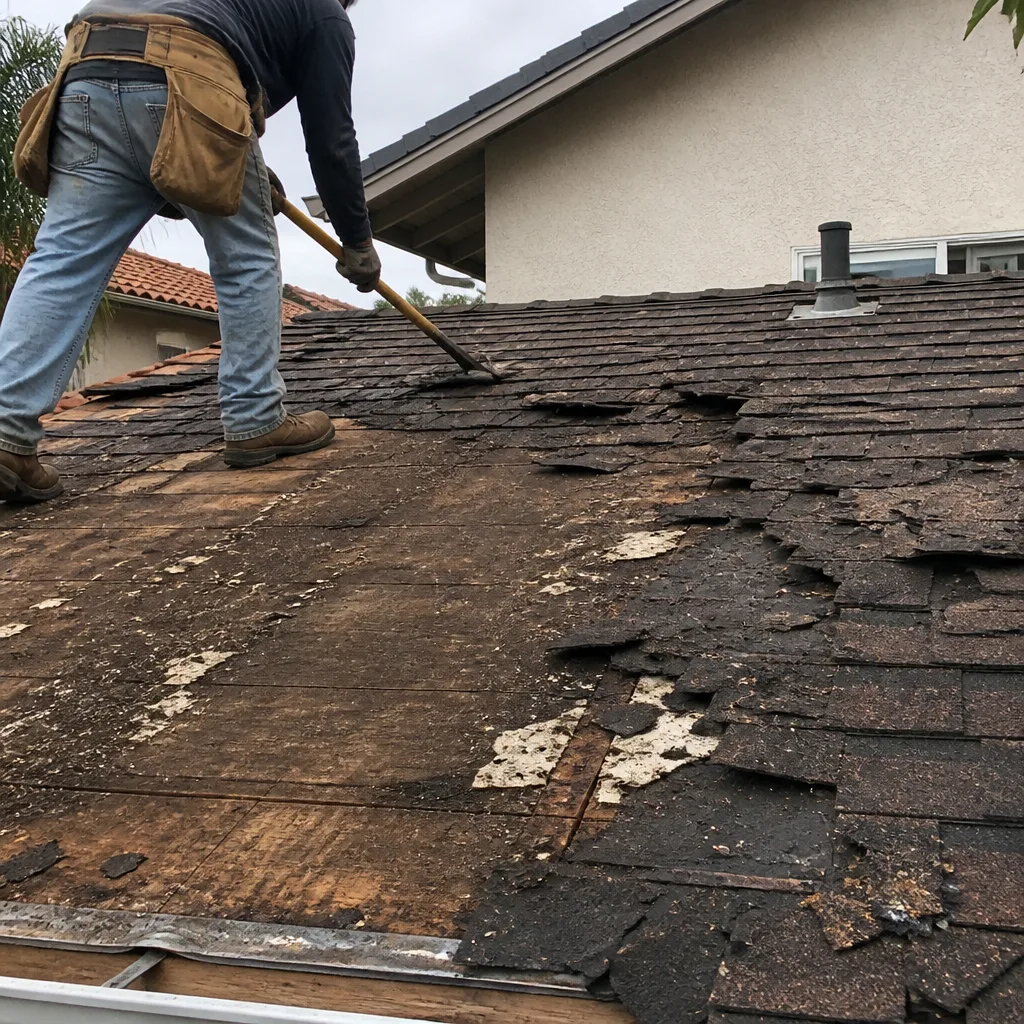 Before
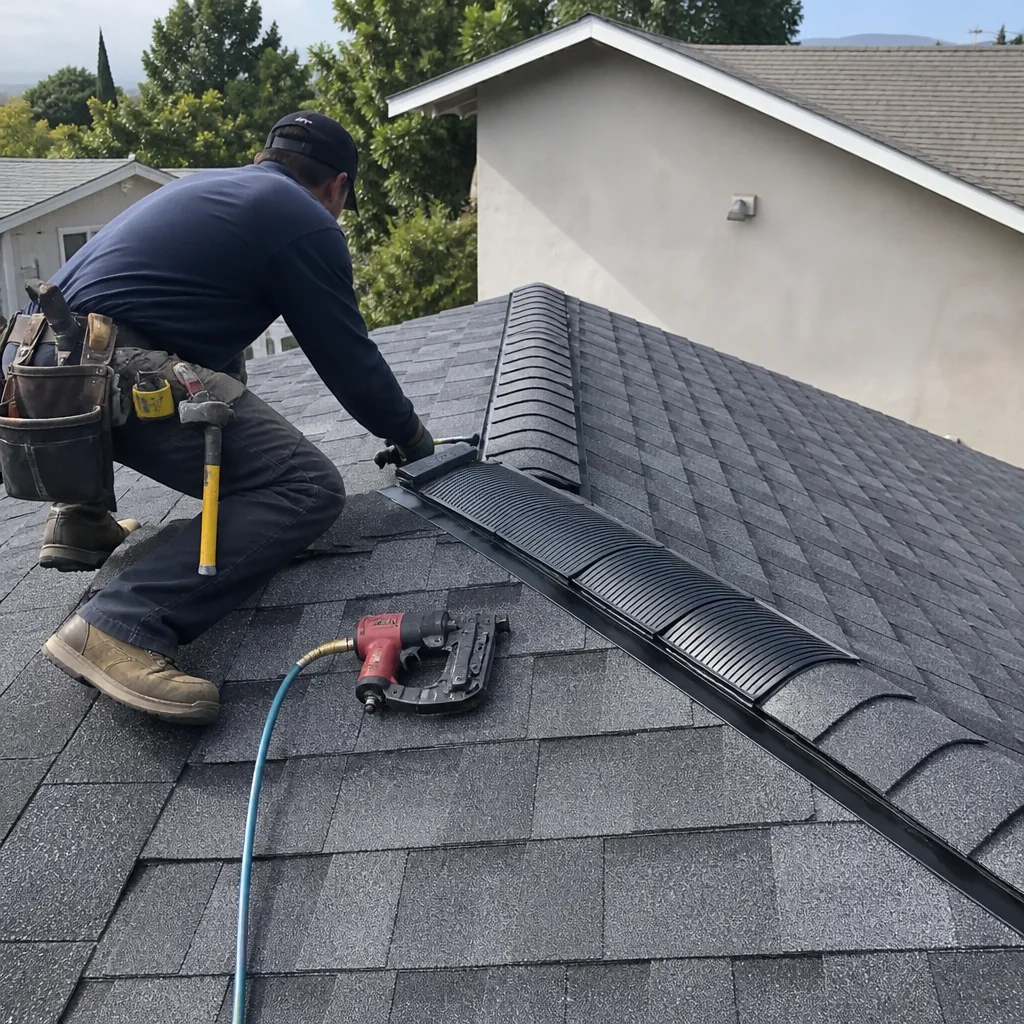 After
AfterWhen to Call a Professional
Roofing is one home system where DIY work carries real risk, and the failure of a DIY repair is rarely visible from the ground until water is already inside your ceiling. If you’re weighing whether to tackle a repair yourself, read our DIY vs Professional Roofing: The Ventura Homeowner’s Decision Guide first. Call a professional when you see missing or lifted shingles after a wind event, when you spot dark staining on north-facing roof slopes that won’t rinse off, when you find water spots on interior ceilings or walls, when the flashing around a chimney or vent shows visible rust, or when your roof is over 20 years old and hasn’t had a professional inspection in the last two. Also call before buying a home in Ventura – a roof inspection during escrow catches the marine-layer damage that a general home inspector doesn’t always flag.
Working on a roof is dangerous – steep pitches, two-story falls, and the hidden weak spots in old decking mean the injury risk is higher than in almost any other home trade. Ventura’s roofing conditions add a specific hazard: the marine layer makes roof surfaces slick in the morning, and the Santa Anas create gusting conditions that make ladder work unstable. We strongly recommend you call a licensed professional rather than climbing up yourself. Roof Repair in Ventura from Crestview Roofing Co Ventura comes with a free estimate – call (559) 249-4917 and we’ll send a technician with a written quote. You’ll know exactly who is coming, when they’ll arrive, and what the work will cost before anything starts.
Frequently Asked Questions
An asphalt architectural shingle roof in Ventura typically lasts 18 to 25 years, while tile roofs can last 40-plus years with proper underlayment replacement every 20 to 30 years. The marine layer and salt air shorten the lifespan of roofs that weren’t installed with algae-resistant shingles and corrosion-resistant flashing, so material choice and coastal-specific installation matter more in Ventura than they do inland. For a seasonal breakdown of what to check, see our Roof Repair Maintenance Checklist for Ventura Homeowners. Call (559) 249-4917 for a roof inspection and a written quote on any recommended work.
A full shingle roof replacement on a standard 1,800-square-foot Ventura home generally costs $9,000 to $16,000, with the final number depending on roof pitch, two-story access, decking condition, and material grade. Tile and metal roofs run higher, often $20,000 to $50,000, reflecting the labor and underlayment work involved. For an exact quote with line-item pricing in writing, call (559) 249-4917 – estimates are free.
Yes, Ventura requires a building permit for a full roof replacement, and a permit isn’t required for most minor repairs that don’t touch the structural decking. The permit includes city inspections, which provide an independent review of the work, and unpermitted reroofs create problems at sale. The roofer you choose should handle the permit paperwork; if an estimate doesn’t include a permit line, ask why.
For most coastal Ventura homes, architectural asphalt shingles with algae-resistant granules and a high wind uplift rating are the best balance of cost, durability, and wind performance. Standing seam metal with concealed fasteners and stainless or copper flashing is the premium option that handles salt air almost indefinitely. Wood shake is the material we recommend avoiding near the coast, because the marine layer accelerates moss growth and the fire risk complicates insurance.
That staining is algae growth, and it’s concentrated on the north slope because Ventura’s morning marine layer keeps that side damp for several hours longer than the sun-exposed south slope. Algae holds moisture against the shingle granules, which shortens the roof’s service life, and the permanent fix is a replacement with algae-resistant shingles. If the staining is extensive, a roof inspection will tell you whether it’s cosmetic or whether the shingles have absorbed enough moisture to warrant replacement – call (559) 249-4917 to schedule one.
Technically yes, but a roof-over – new shingles installed over the existing roof – is rarely a good financial decision in Ventura, because the marine layer moisture damage hidden under the old roof stays hidden and keeps degrading. The new shingle manufacturer’s warranty typically won’t apply to a roof-over, and the extra weight can strain the roof structure. In our experience, the homes in Ventura that need repairs repeatedly are often the ones where a previous owner chose the roof-over to save money upfront.
The Bottom Line
Ventura isn’t just another “Southern California climate” line in a roofing manual. The marine layer keeps roof surfaces damp enough to grow algae on north slopes, the salt air rusts cheap flashing within years, and the Santa Ana winds uplift improperly fastened shingles with zero warning. Every decision – from the shingle brand you pick to the flashing alloy specified in the estimate to the number of nails per shingle – should be made for these conditions, not for a generic California standard.
The second takeaway is process. A roof is the one home system you can’t inspect from the inside, which means written prices, before-and-after photo documentation, and specific warranty terms in writing are worth more than any verbal reassurance. Whether you hire us or someone else, hold the standard: written price before work starts, itemized estimate with material and fastening specs, and a photo record of the finished work. That’s how you get a roof that protects your home through every marine layer morning and Santa Ana night for the next two decades. If you need Roof Installation in Ventura or a comprehensive roof evaluation, call (559) 249-4917 for a free estimate.
Written by Dylan Pace, Owner at Crestview Roofing Co Ventura, serving Ventura since 2000.