
Last updated October 17, 2026
 Architectural shingles
 Metal roofing
 Tile roofing
 GAF
GAF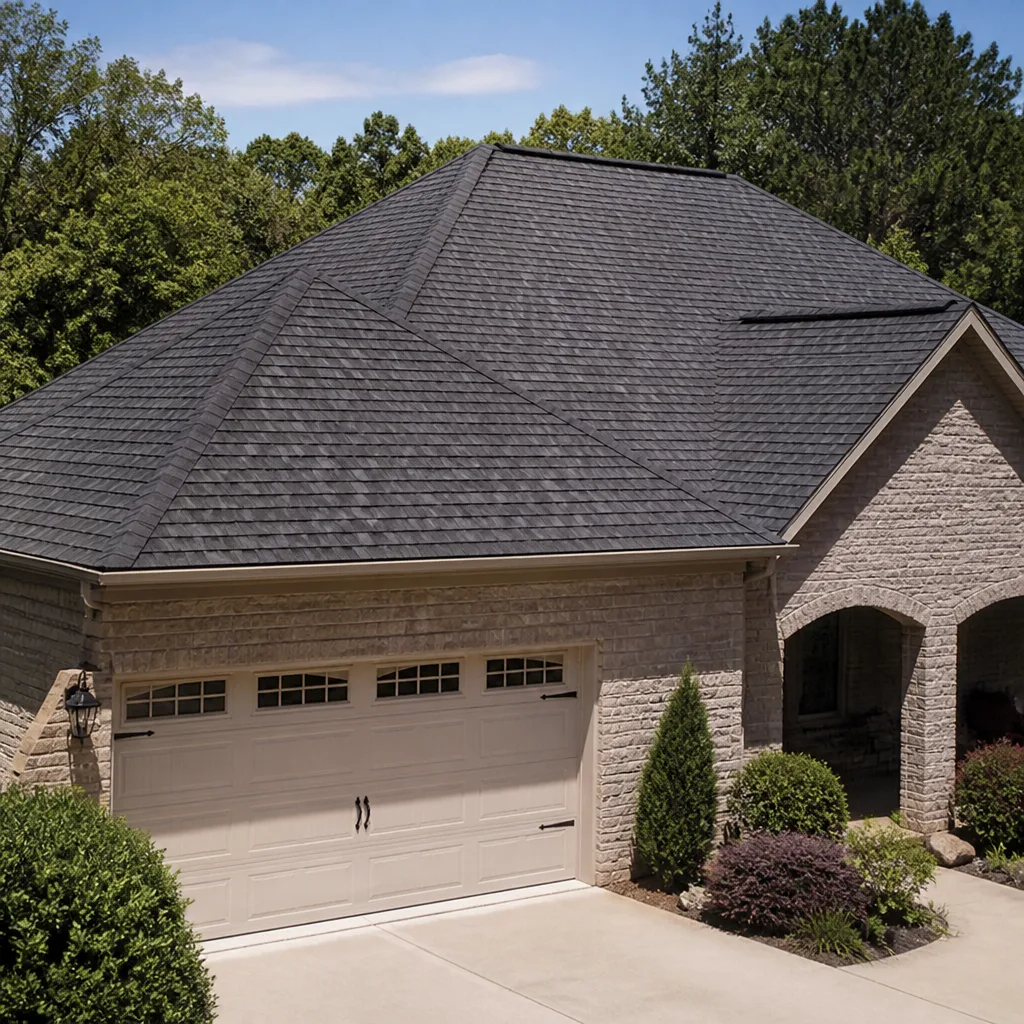 Owens Corning
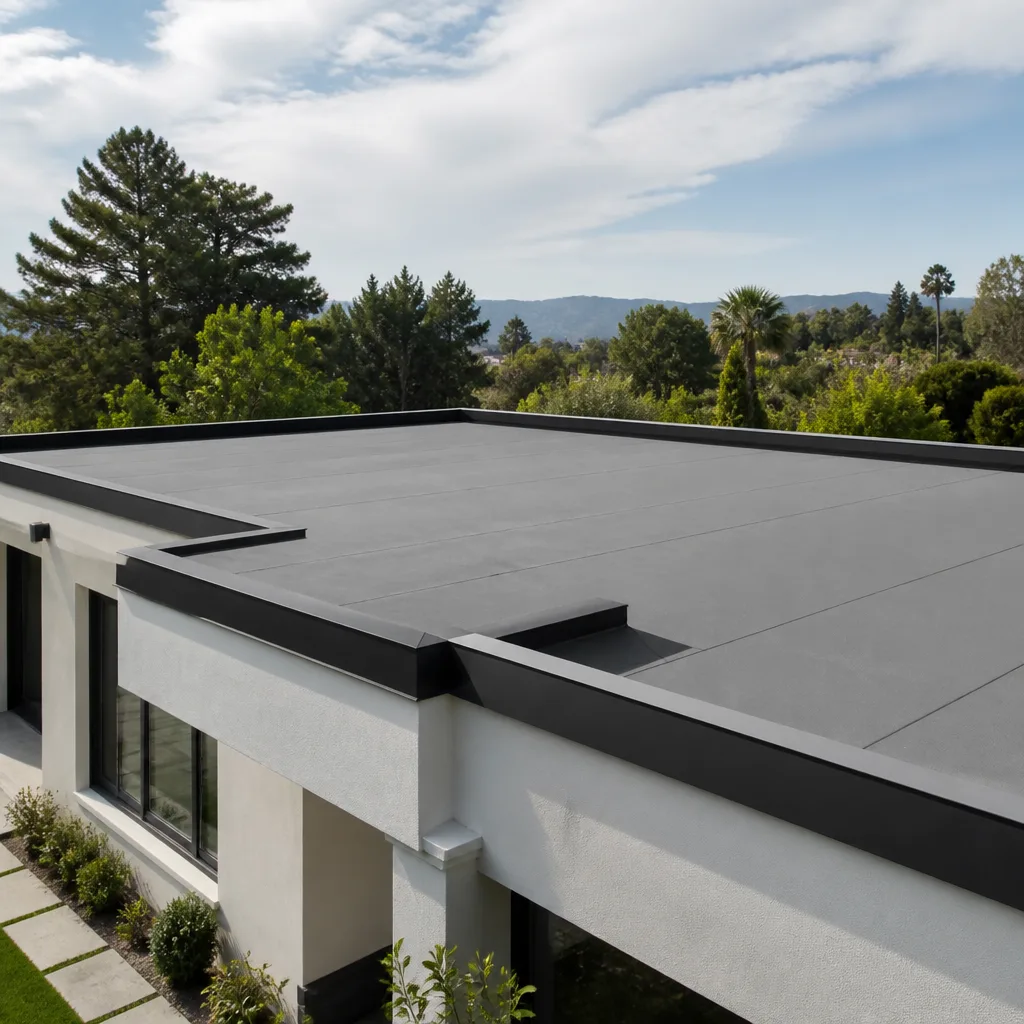 Flat & low-slope
Free roof inspection with deck photos before we talk money - GAF and Owens Corning certified installation
Roof Repair Maintenance Checklist for Ventura Homeowners
Most roof maintenance advice fails Ventura homeowners because it was written for places with snow, ice dams, and freeze-thaw cycles. Our climate doesn’t punish roofs with dramatic winter events. It punishes them with slow, cumulative damage: salt air, marine layer moisture, and Santa Ana wind events that lift shingle edges a fraction of an inch at a time. By the time you see a leak, the damage is usually months or years old. This guide ties every maintenance task to the specific weather event that causes it here, so you know exactly what to check, when to check it, and what’s worth calling a pro about for Roof Repair. If you own a home in Ventura, this is the checklist that actually matches your roof’s reality.
Quick Answer
A Ventura roof maintenance checklist should include four seasonal inspections: after every Santa Ana wind event, during the marine layer season from May through September, before winter rains arrive, and once in early spring. Homeowners can handle most inspection work from the ground with binoculars, but any lifted shingles, cracked flashing, or visible granule loss warrants a professional roofer’s eyes. Expect to budget $180 to $340 for most minor repairs caught early, and far less than a full roof replacement in Ventura runs when problems are ignored.
Styles & brands we work with
Table of Contents
- Post-Santa Ana Wind Event Checklist
- Marine Layer Season Checklist (May – September)
- How to Inspect Your Roof from the Ground with Binoculars
- Maintenance Tasks That Void or Extend Manufacturer Warranties
- Building a Simple Roof Photo Log System
- Early Warning Signs Ventura Homeowners Should Never Ignore
- Common Mistakes to Avoid
- When to Call a Professional
- Frequently Asked Questions
Post-Santa Ana Wind Event Checklist
Santa Ana winds are the single most damaging weather pattern for Ventura roofs. The National Weather Service consistently records gusts of 40 to 60 mph along the Ventura County coastline, with localized canyon areas seeing higher. Those winds don’t just hit your roof once. They flutter shingle tabs thousands of times over the course of an afternoon, fatiguing the adhesive seal strip that holds each shingle down.
Here’s what we’ve seen after nearly every major Santa Ana event in Ventura: shingle tabs that lifted just enough to break their seal but not enough to blow off entirely. That’s the dangerous middle ground. The shingle looks fine from the street, but it’s no longer bonded to the shingle below it. The next wind event, or even a strong onshore breeze, finishes the job.
Run through this checklist within 48 hours after winds exceed 30 mph:
- Walk the perimeter of your home and look at the roof edges from the ground. Pay attention to any shingle that appears to be sitting higher than its neighbors or casting an unusual shadow.
- Check the ridge cap specifically. Ridge caps are the shingles that run along the peak of your roof. They catch the full force of wind from every direction. A dislodged ridge cap exposes the seam at the roof’s highest point, which is exactly where water wants to enter during the next rain.
- Inspect valleys and hips for lifted edges. Valleys are where two roof planes meet and channel water. A lifted edge there directs water under the shingle instead of over it.
- Look for shingle granules in gutters and downspouts. Santa Ana winds scour the shingle surface. Fresh granule accumulation in your gutters after a wind event tells you the shingles took real abrasion damage.
- Check for displaced flashing around chimneys, vents, and skylights. Flashing is the metal stripping that seals the joints where these protrusions meet the roof. Wind-driven debris bends flashing, and once bent, it never reseats itself.
At Crestview Roofing Co Ventura home, we field a spike in calls after every significant Santa Ana event. The repair volume isn’t dramatic, full-blown blow-offs. It’s dozens of small, localized failures that homeowners discover because they took 20 minutes to look. If you find lifted edges or displaced ridge caps, mark them and call a pro. Delaying means the next rain turns a $200 seal repair into a $900 water-damage claim.
Marine Layer Season Checklist (May – September)
Ventura’s marine layer is the roof killer nobody talks about. From May through September, overnight fog rolls in and saturates everything, then burns off by mid-morning. Your roof goes through a daily cycle of wetting and drying. That cycle creates the perfect environment for biological growth: moss, algae, and lichen.
Here’s the part most Ventura homeowners don’t understand: biologic growth isn’t just a cosmetic issue. Algae and moss hold moisture against the shingle surface for hours longer than normal fog would. That trapped moisture accelerates granule loss. As granules erode, the asphalt underneath is exposed to UV, which degrades it faster. Left unchecked for two or three marine layer seasons, you’ll see shingles that are functionally aged five to seven years beyond their actual age.
Run this checklist during any month the marine layer is active:
- Look for dark streaks or patches on the roof surface. The most common Ventura culprit is blue-green algae (*Gloeocapsa magma*), which appears as black or dark green streaks, especially on the north-facing and shaded slopes. It feeds on the limestone filler in asphalt shingles and spreads rapidly.
- Check for actual moss growth in shaded areas. Moss requires more moisture than algae, so it’s less common in Ventura unless you have heavy tree cover or a roof section that never gets direct sun. If you have moss, it’s raising shingles and lifting them off the roof deck. That’s a structural concern, not an aesthetic one.
- Inspect for lichen colonies. Lichen is the crusty, gray-green growth that anchors itself to shingle surfaces. It literally roots into the shingle and cannot simply be brushed off. Lichen means the shingle granule layer is already compromised.
- Evaluate your tree cover. Overhanging branches extend marine layer moisture by blocking the morning sun that dries your roof. If a tree canopy keeps a roof section damp until 2 p.m. during marine layer season, consider trimming it back. The difference in shingle lifespan is measurable.
- Check gutters during the marine layer too. Fog doesn’t wash debris out of gutters the way rain does. Granules, small leaves, and dust accumulate and hold water. Standing water in gutters breeds algae that then migrates onto your roof edge.
The good news: early-stage algae is treatable with a professional cleaning using appropriate algaecide products that won’t damage your shingles or void your warranty. The bad news: once lichen has taken hold, those shingles are usually beyond saving and will need replacement. Catching it during the marine layer season, before growth works under the shingle edges, is the difference between a $400 cleaning and a $4,000 roof section replacement.
Most algae-resistant shingles on the market today, including lines from GAF, CertainTeed, and Owens Corning, come with stain protection built in. But even those have limits. The limestone is reduced, not eliminated. If you’re considering new shingles, ask about algae resistance specifically, especially if your home sits in a shaded Ventura canyon or under heavy tree cover.
How to Inspect Your Roof from the Ground with Binoculars
You don’t need to climb a ladder to perform a meaningful roof inspection. In fact, we’d rather you didn’t. Roofs are dangerous, and most homeowners don’t own the safety equipment needed to walk one correctly. A pair of 10x or 12x binoculars gets you close enough to spot 80% of the issues that lead to repairs.
Here’s a step-by-step approach for a ground-level inspection in Ventura:
- Start at the street, directly in front of your house. Scan the entire roof plane methodically, moving left to right, top to bottom. You’re looking for anything that breaks the pattern: a shingle out of alignment, a gap where one should be, a change in surface texture.
- Move to each corner of your home and repeat the scan. Different angles reveal different problems. A lifted tab that’s invisible from straight-on often becomes obvious when viewed at a sharp angle in morning or evening light, when shadows are longer.
- Focus on the valleys first. At any intersection of two roof planes, confirm that valley shingles lay flat and are intact. Valley metal, if exposed, should be free of rust and kinks. Displaced valley shingles are a top-three source of Ventura roof leaks.
- Inspect all flashing points next. This means chimneys, plumbing vents, gas vents, skylights, and wherever the roof meets a wall. Flashing should sit flush against the structure. Look for gaps, missing sealant, rusty spots, and any metal that’s bent, lifted, or pulled away from the roof surface.
- Examine penetrations closely. Plumbing vent boots, the rubber gaskets around pipes, crack over time from UV exposure. A cracked boot lets water run straight down the pipe and into your house. These are cheap to replace when caught early, expensive when ignored.
- Check the eaves and rakes for shingle overhang. Shingles should overhang the roof edge by roughly 3/4 of an inch. If you see uneven overhang, missing edge shingles, or exposed roofing felt at the edges, the roof perimeter is failing. Edge failures cascade inward.
- Look at the underside of the roof from inside the attic, if accessible. No binoculars needed here. During daylight, look for pinpoints of light coming through the roof deck, dark staining on rafters or decking, and any musty smell. This is your best early-warning system for leaks that haven’t reached the interior ceiling yet.
If any of your ground-level observations raise questions, mark the location with a photo and a description. Don’t attempt to climb the roof to “get a closer look.” Roofs in Ventura are often steep, and the same marine layer moisture that grows algae also makes shingles slick in the early morning. Let someone with the right safety equipment handle the up-close work.
Maintenance Tasks That Void or Extend Manufacturer Warranties
Most Ventura homeowners don’t read the fine print on their shingle warranty until something goes wrong, and by then it’s too late. The major manufacturers, including Boral, Tamko, GAF, and CertainTeed, publish maintenance requirements that directly affect warranty coverage, as covered in our guide to Roofing Permits, Codes & Inspections in CA: What You Need to Know. Skip certain tasks, and a legitimate warranty claim can be denied. Document other tasks, and your coverage extends or strengthens.
Here’s what the fine print actually requires:
Tasks That Void Coverage If Skipped
- Allowing moss, algae, or lichen to establish and persist. Every major manufacturer’s warranty excludes damage caused by “lack of proper maintenance.” A roof covered in moss or lichen is not a manufacturing defect. It’s neglect. If the growth causes shingle degradation, your claim will be denied.
- Failing to maintain adequate attic ventilation. Shingle warranties assume proper ventilation. An attic that overheats cooks shingles from underneath, causing premature granule loss and curling. If a manufacturer’s inspector finds inadequate ventilation contributed to the failure, the warranty is dead. Ventilation is typically checked during roof installation in Ventura, but it’s worth verifying every few years.
- Pressure washing the roof. This one surprises people. Almost every shingle warranty explicitly voids coverage if the roof is pressure washed. A pressure washer strips granules off the shingle face, removes the protective UV barrier, and drives water under the shingle edges. Never let anyone pressure wash an asphalt shingle roof. Ever.
- Improper attic insulation installation that traps heat. If added insulation blocks air flow at the eaves or is packed tight against the roof deck, it voids the shingle warranty on thermal damage grounds. Ventura homes built before 1980 often have insulation issues that go unnoticed until the roof fails.
Tasks That Extend or Strengthen Coverage
- Keeping a documented maintenance log. Manufacturers honor warranties more generously when homeowners can demonstrate a pattern of consistent inspection and repair. Your photo log (covered in the next section) is your best evidence.
- Using credentialed contractors for repairs. Manufacturer warranties typically require that repairs be completed by a licensed roofing contractor. DIY repairs, especially those involving sealant or re-nailing, often void the warranty on that section of the roof.
- Replacing damaged flashing promptly. Flashing failures are the leading cause of leaks in Ventura. The shingle warranty covers shingles, not flashing, but a prompt flashing repair protects the shingles around it from water damage, which keeps the shingle warranty intact.
- Installing proper roof deck protection. If you’re re-roofing, adding a high-quality synthetic underlayment or ice-and-water shield in the valleys and eaves extends manufacturer coverage in many cases. CertainTeed and GAF both offer enhanced warranty programs for systems built with their complete component package.
The takeaway: your warranty isn’t a passive document. It requires active participation. The good news is that most of the required maintenance tasks are also the things that protect your home anyway. A well-ventilated, algae-free, properly flashed roof lasts longer, warranty or not.
Building a Simple Roof Photo Log System
The most valuable maintenance tool you can own is a camera roll with a consistent record of your roof’s condition. Not for Instagram. For evidence. When a leak appears, a hailstorm passes through, or a contractor gives you a diagnosis, having a baseline to compare against changes everything.
Here’s a simple system that takes 15 minutes twice a year:
- Pick your standard shooting positions. Choose four to six spots around your property where you can consistently photograph the roof: front-left, front-right, rear-left, rear-right, and one from each side. Shoot from the same positions every time.
- Shoot the same angles every inspection. Wide shots that show the full roof plane, plus close-ups of every penetration: chimney, vents, skylights, and where the roof meets walls. Consistency matters more than photographic skill.
- Date-stamp everything. Digital photos carry metadata automatically, but add the date to the file name or folder for easy reference. “RoofCheck_2025_04” is all you need.
- Store them somewhere permanent. Cloud storage is ideal. Create a folder called “Roof Records” and add to it after every inspection. Don’t rely on your phone’s camera roll, which gets pruned when you run out of space.
- Photograph all repair work in progress. If a roofer replaces flashing or seals a penetration, photograph before, during, and after. This is your proof of what was done and your documentation for any warranty claim.
- Keep invoices and written quotes in the same folder. Scan or photograph every roof-related document. A complete record means no disputes about what was promised, what was billed, and what was covered.
In our experience, homeowners who maintain a photo log get better outcomes on warranty claims and insurance disputes. They also avoid paying for “new damage” that actually predates their policy. A dated photo of a crack that existed six months ago means your insurance company can’t attribute it to a recent event if it was already there. The photo log is cheap insurance. Use it.
Early Warning Signs Ventura Homeowners Should Never Ignore
Some roof problems announce themselves loudly: a visible leak, a missing shingle, a branch through the decking. Others are quieter. These are the ones that cost Ventura homeowners the most money because they go unnoticed until the damage is extensive.
Granules in your gutters
Every shingle sheds some granules over its lifetime, especially in the first year after installation. But a consistent stream of granules in your gutters, especially alongside visible bald spots on the shingles, means the shingle surface is failing. In Ventura’s salt air and UV environment, granule loss accelerates once it starts. A shingle that’s lost its granules has lost most of its UV protection and its useful life.
Interior ceiling stains that appear and disappear
Here’s a Ventura-specific pattern we see regularly: a stain appears on a ceiling after a rain, then fades or dries once the weather clears. Homeowners forget about it. But the water that caused the stain is still trapped in the wall cavity or attic, and now it’s working on the framing. By the time you notice the stain again, often months later, you have mold, rot, or compromised drywall.
Shingles that look “curly” at the edges
Shingle curling is usually a ventilation issue. The attic is too hot, the shingles are cooking from underneath, and the edges lift in response. In Ventura, where marine layer moisture and warm afternoon sun cycle constantly, curling is often more pronounced than in drier climates. Once curling starts, it doesn’t reverse. The shingles need replacement, and the ventilation issue needs to be addressed or the new shingles will curl too.
Rust on flashing or visible metal components
Salt air accelerates metal corrosion. Ventura homes within two or three miles of the coast see flashing decay faster than inland properties. Rust on flashing isn’t just cosmetic. The metal is losing structural integrity, and the seal between the flashing and the roof is breaking down. Once that happens, water entry is a matter of time.
Daylight visible in the attic
This one requires an attic inspection, but it’s the most definitive early warning sign you can find. Go into your attic on a sunny day and turn off the artificial light. If you can see pinpoints of daylight through the roof deck, water can enter through those same openings. Even if the gaps are small and no leak has appeared yet, they represent a clear failure of the roofing system.
Dark streaks on north-facing slopes
We covered algae in the marine layer section, but it bears repeating here. The black streaks spreading across your shingles are not just “dirt.” They’re living organisms eating the limestone in your shingles. Left alone through one or two wet seasons, they’ll cause granule loss and shortening of the roof’s effective life. Early treatment is inexpensive. Late treatment is a roof tear-off.
If you notice any of these signs, document them with photos and contact a professional for an evaluation. The cost of a diagnostic visit is minor compared to the cost of the damage these signs predict. Roof repair in Ventura is most affordable when the problem is still small.
Common Mistakes to Avoid
- Power washing the roof to remove stains. Every shingle manufacturer voids the warranty for pressure washing, and the process strips granules off the shingle face. Algae stains should be treated with algaecide by a professional, not blasted with 3,000 PSI.
- Waiting for a leak before addressing visible warning signs. By the time water enters your living space, it has already passed through the shingle layer, the underlayment, the roof deck, and probably the insulation. The damage compound multiplies the longer you wait.
- Applying sealant or caulk as a permanent fix. Roofing sealant has a legitimate place in roofing, but it’s a temporary band-aid, not a repair. Ventura homeowners who paint caulk over flashing cracks every year instead of replacing the flashing are just scheduling their leak for later.
- Assuming a new roof needs no maintenance. Even perfectly installed roofs accumulate debris, develop organic growth, and experience seal strip failure over time. “New” doesn’t mean “maintenance-free.” It means “maintenance hasn’t started yet.”
- Ignoring tree branches hanging over the roof. Branches scrape shingles in the wind, drop debris that holds moisture, and create shaded zones where algae thrives. Trimming back overhanging branches is one of the cheapest preventive actions a homeowner can take.
- Replacing shingles without checking attic ventilation. If the attic is overheating, new shingles will curl just like the old ones did. The ventilation problem has to be solved alongside the shingle replacement, or you’re just buying the same failure twice.
- Relying on a home inspector’s general roof assessment from years ago. A pre-purchase home inspection is a snapshot from a specific moment. It doesn’t cover what’s changed since then, and it’s rarely detailed enough to catch the early-stage issues that become expensive later.
When to Call a Professional
If your ground-level inspection turns up lifted shingles after a Santa Ana event, cracked flashing around a chimney or vent, visible attic daylight, persistent ceiling stains, or biological growth that’s been present for more than one marine layer season, call a professional roofer. These are not DIY fixes. A roof is not a safe place for a homeowner without the right equipment, experience, and fall protection, and the mistakes made during amateur repairs tend to cause more damage than they prevent. Crestview Roofing Co Ventura offers free estimates in Ventura. Call (559) 249-4917 and we’ll assess the situation, put our findings in writing, and give you a price before any work starts.
Frequently Asked Questions
In Ventura, you should perform a visual inspection from the ground four times a year: after every significant Santa Ana wind event, once during marine layer season, before winter rains arrive, and once in early spring. The post-Santa Ana and marine layer inspections are the most important because those are the weather patterns that cause the most cumulative roof damage here. Call (559) 249-4917 if any inspection raises concerns; estimates are free.
Most minor roof repairs in Ventura, like resealing a lifted shingle tab or replacing a cracked pipe boot, run between $180 and $340. More involved repairs, such as replacing a section of flashing or repairing valley damage, typically fall between $400 and $900. Full roof replacement costs depend on roof size, pitch, and material choice. Call (559) 249-4917 for a written line-item quote before any work begins.
No. Estimates from Crestview Roofing Co Ventura are free, and every estimate includes a written price before any work starts. The number on the written estimate is the number on the invoice, with no change orders and no surprises. Call (559) 249-4917 to schedule yours.
The 365-Day Done Right Promise covers every repair Crestview Roofing Co Ventura completes for a full year, in writing, included with every job at no extra cost. If a covered repair fails within 365 days, we return and correct it at no charge. That includes a free second visit if the repair fails, with no negotiation and no runaround.
Yes. A pair of binoculars from ground level is sufficient to spot most early-stage roof problems: lifted shingles, damaged flashing, granule loss, and biological growth. Work through the sections of your roof systematically from multiple angles. If you spot anything concerning, do not climb up for a closer look. Contact a professional who has the right safety equipment instead.
Yes. Algae growth that’s left untreated through multiple marine layer seasons accelerates granule loss and shortens the effective life of your shingles. The dark streaks are living organisms feeding on the limestone in the asphalt, not cosmetic dirt. Early treatment with professional algaecide is inexpensive. Once lichen takes hold, the affected shingles are usually beyond saving and require replacement.
Crestview Roofing Co Ventura installs and repairs using materials from GAF, CertainTeed, Owens Corning, IKO, Atlas, Tamko, and Boral. Manufacturer-backed materials mean the shingle warranty comes from the company that made the product, not just the contractor who installed it.
The Bottom Line
Ventura roof maintenance is not about working through a generic checklist twice a year. It’s about responding to the specific weather patterns that actually affect our roofs: Santa Ana winds that lift shingle edges, marine layer moisture that feeds biological growth, and salt air that degrades flashing faster than inland climates experience. If you inspect after every wind event, watch for algae during marine layer season, document everything with photos, and call a professional the moment you spot a genuine problem, you’ll extend the life of your roof by years and avoid the five-figure surprises that come from neglect. For more guides & resources, explore our blog. The price of vigilance is an hour every few months. The price of neglect is a full tear-off.
Written by Dylan Pace, Owner at Crestview Roofing Co Ventura, serving Ventura since 2000.
See the difference
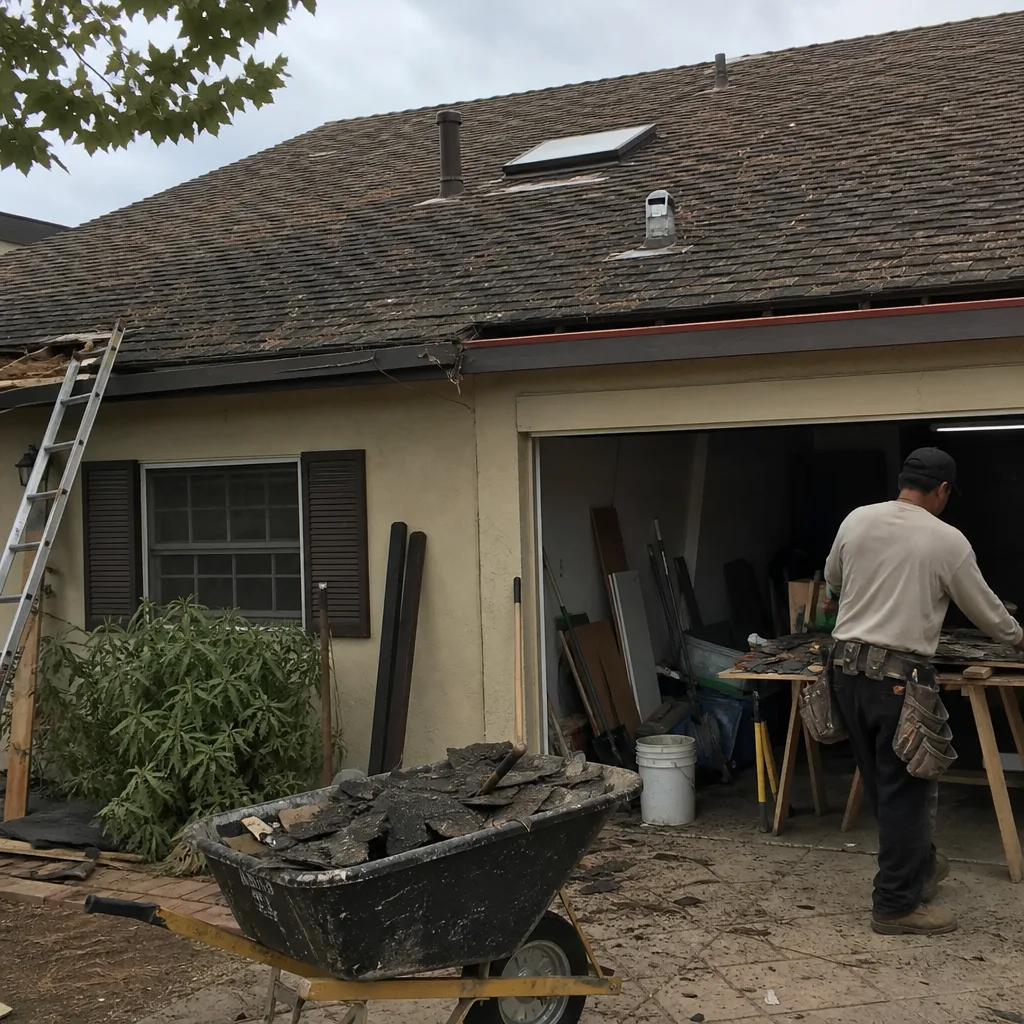 Before
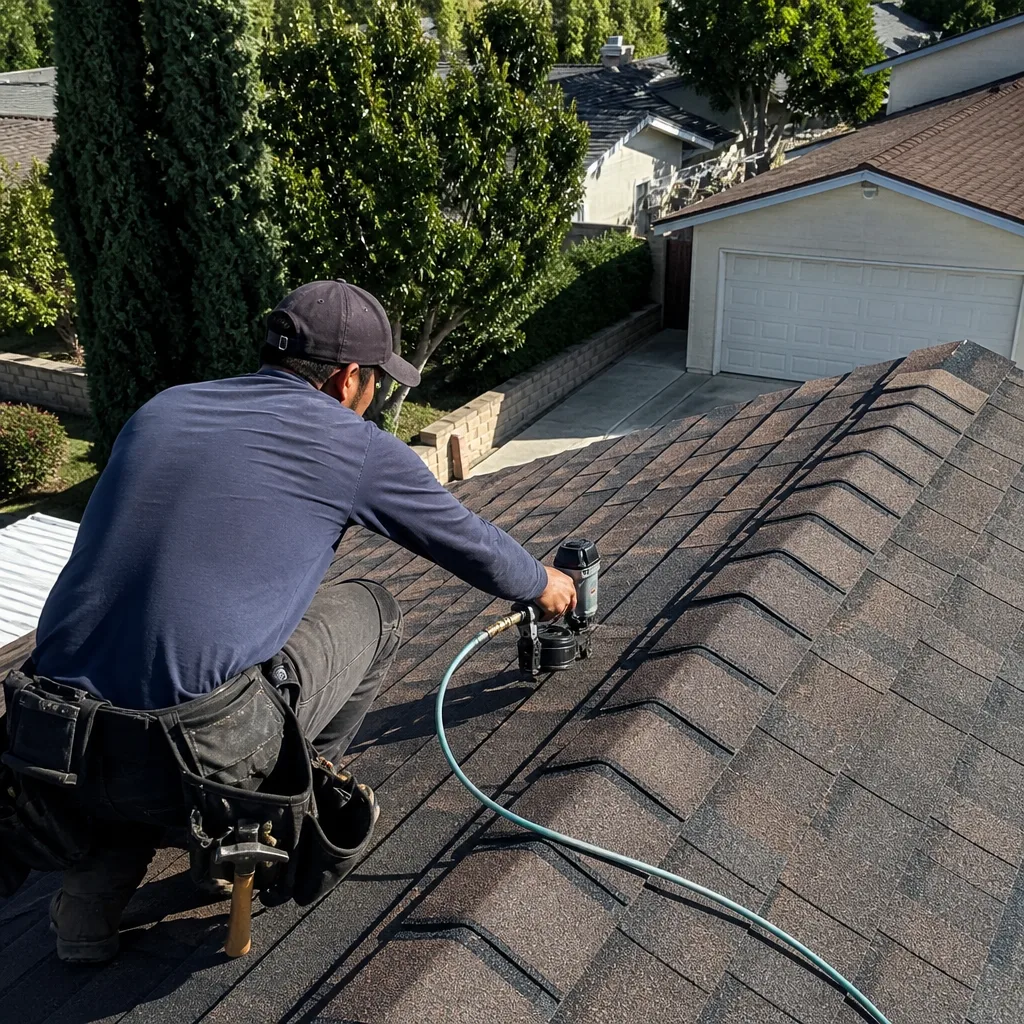 After
After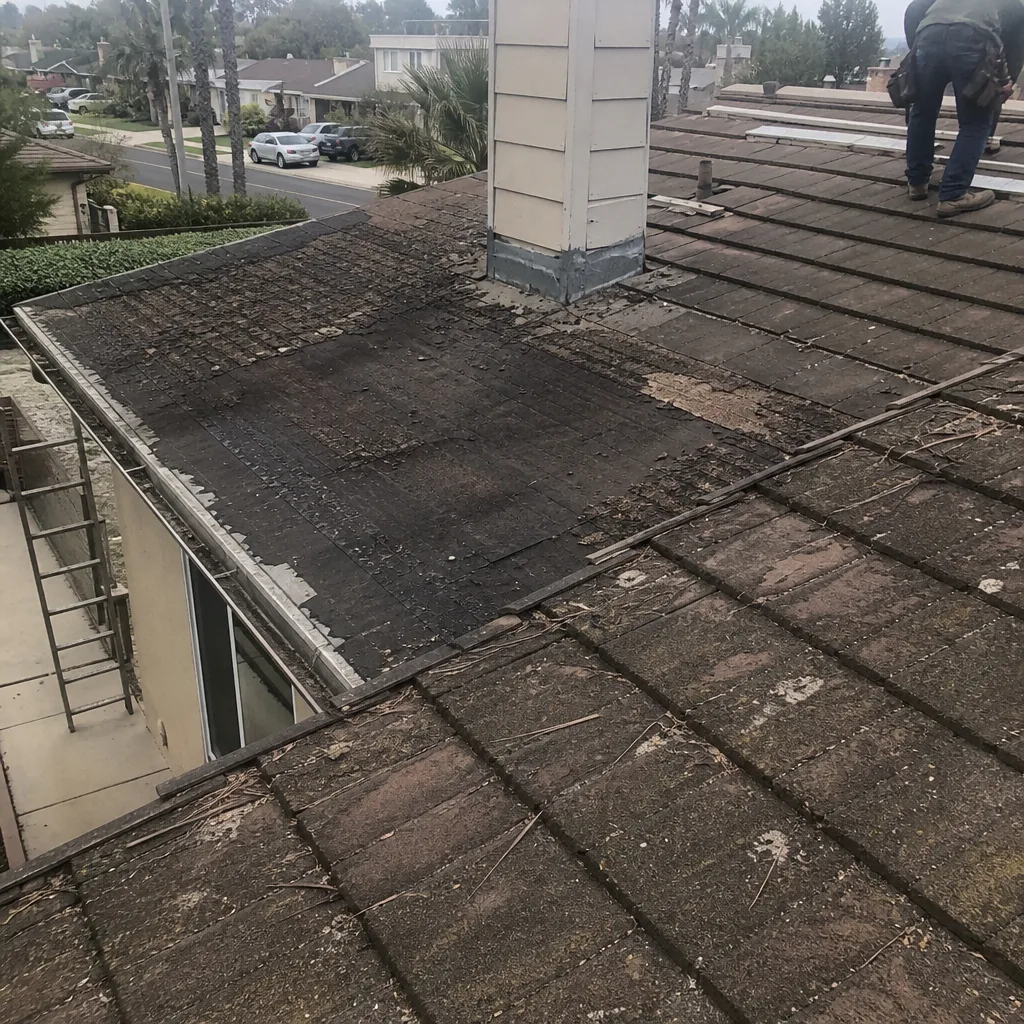 Before
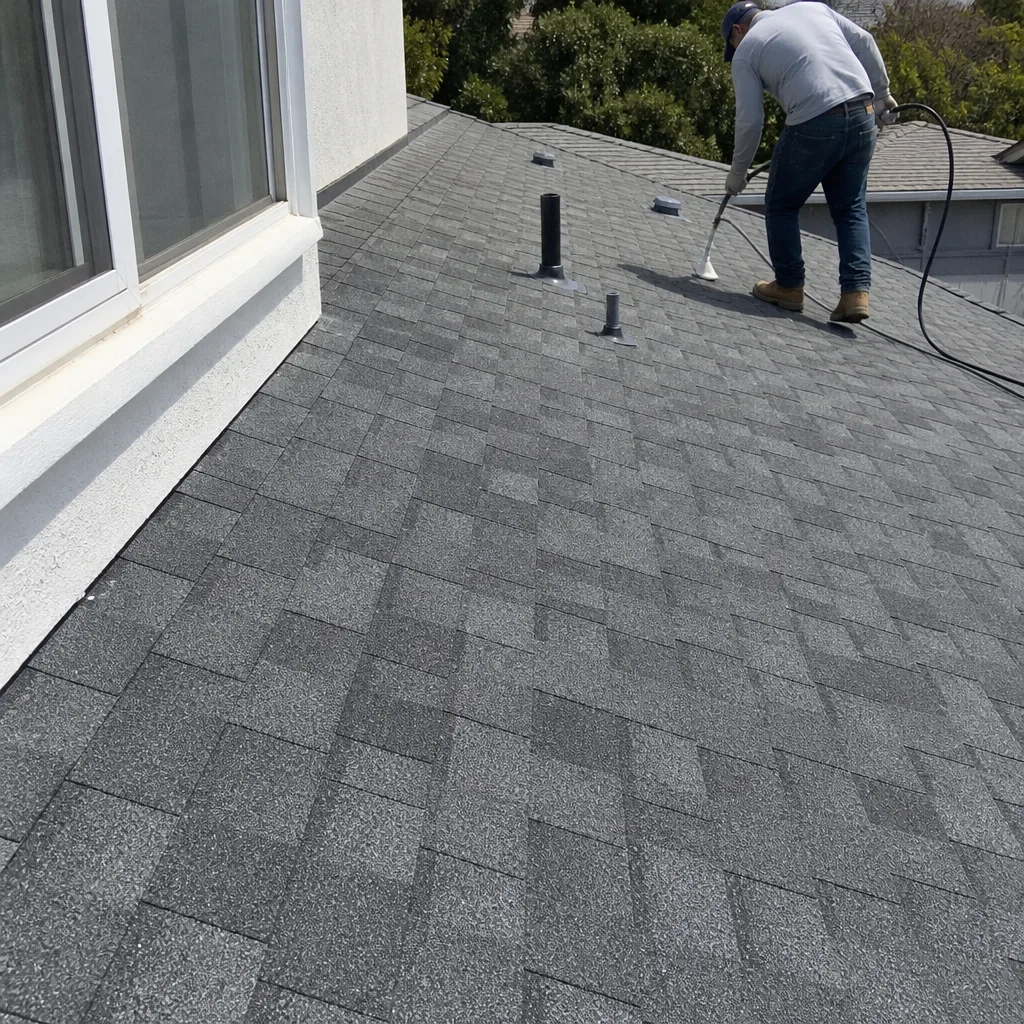 After
After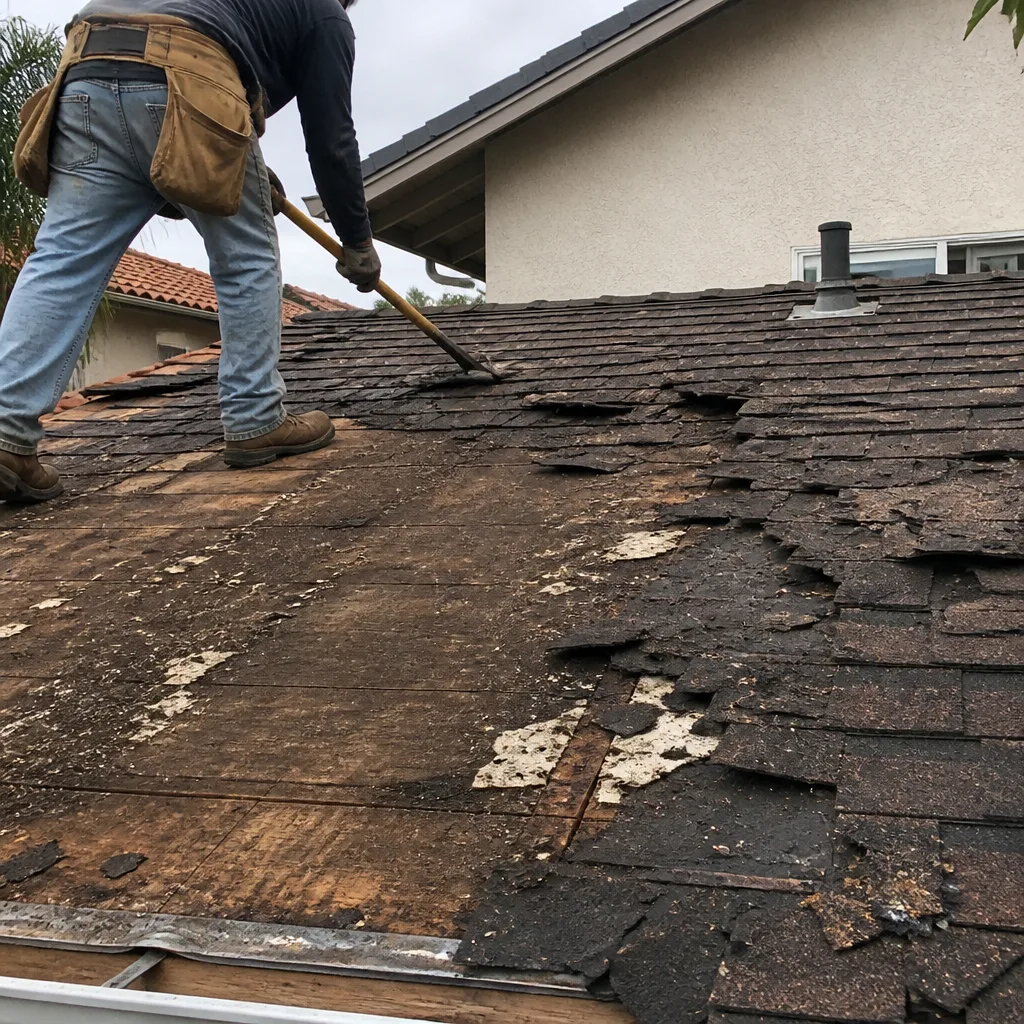 Before
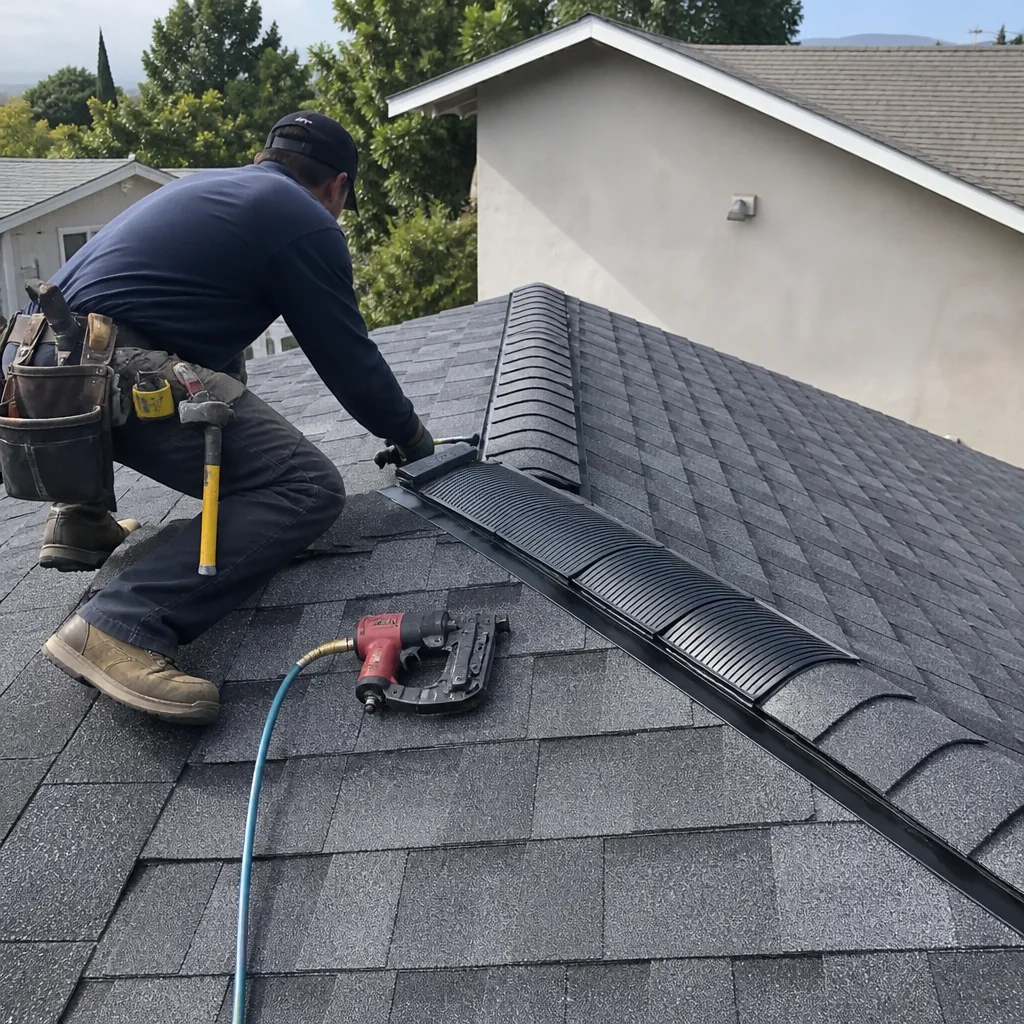 After
After